Story 1 of 14
Bhasmasura and the boon that turned back भस्मासुर
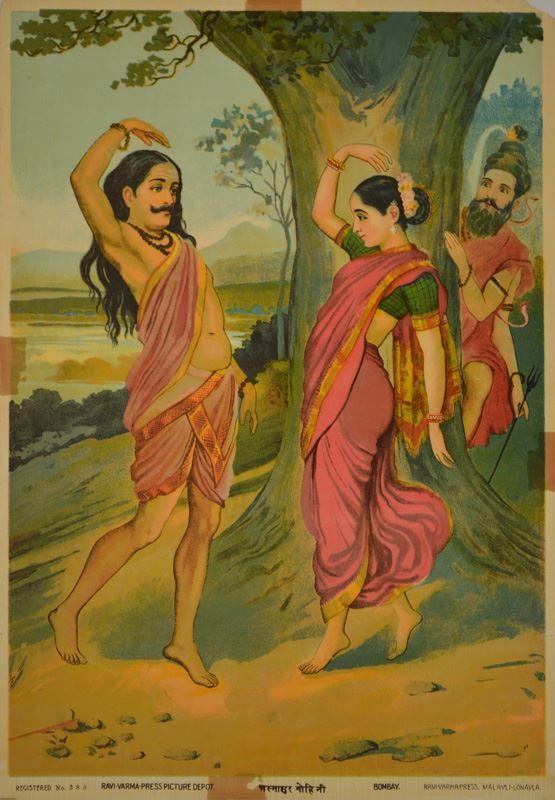
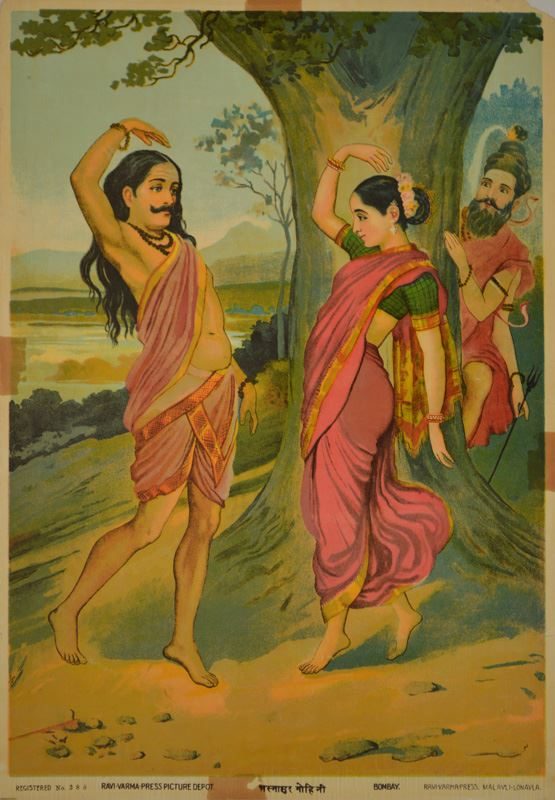
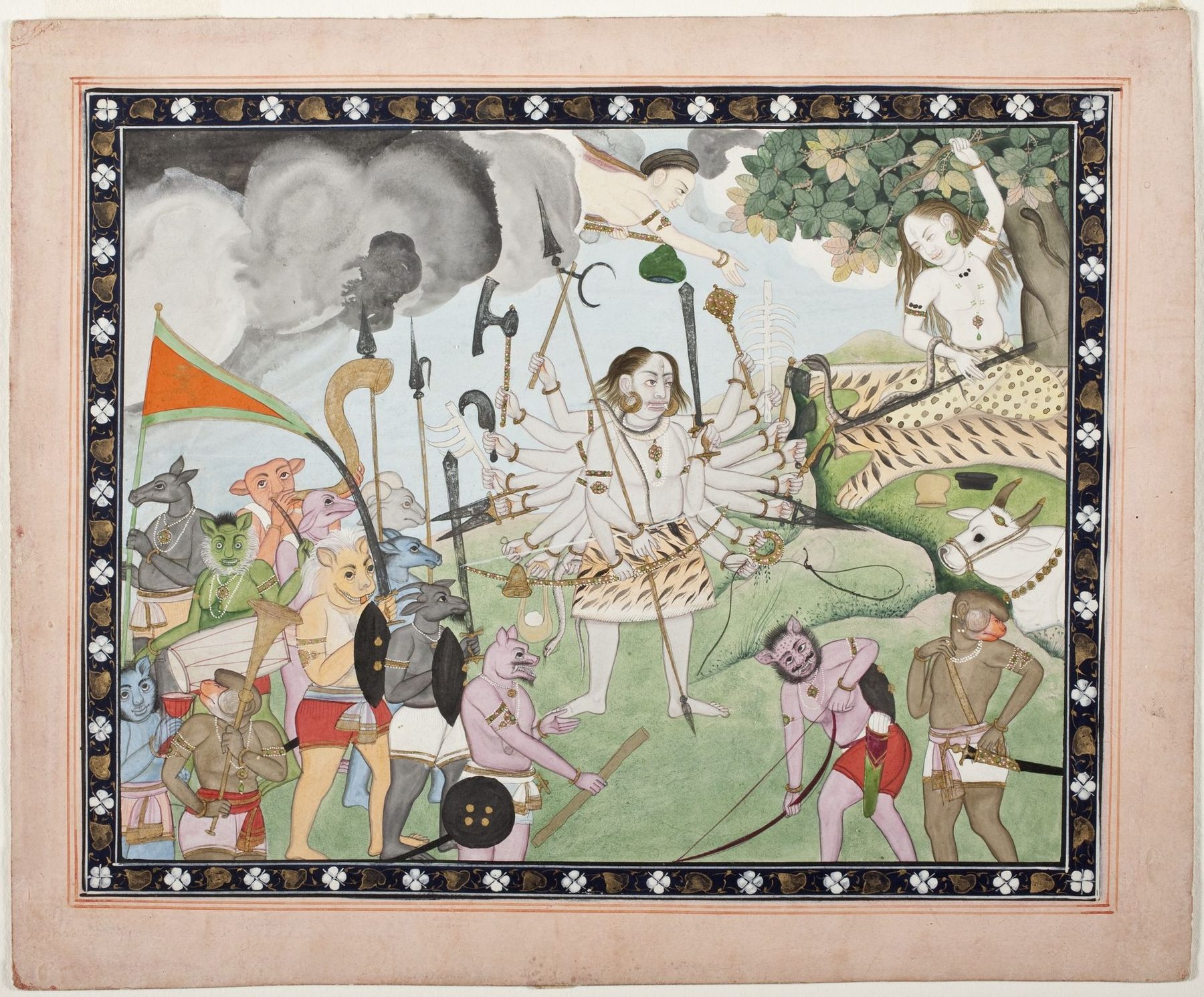
Shiva is called Ashutosh, the one who is quickly pleased, and this story shows the cost of that kindness. An asura performed fierce penance and asked for a boon: whoever’s head he touched would burn to ash. Shiva granted it. At once the asura tried his new power on the giver, and Shiva had to flee across the worlds.
Vishnu stepped in. In the best-known telling he took the form of Mohini, an enchanting dancer, and challenged the asura to copy her steps. Lost in the dance, the asura followed every gesture until Mohini placed her hand on her own head. He did the same, and was reduced to the ash that gave him his name.
The story is told as a warning about power used without wisdom, and as an example of the gods rescuing one another.
SourceBhagavata Purana 10.88 tells it of the asura Vrikasura, tricked by Vishnu disguised as a young student. The name Bhasmasura and the Mohini dance come from later retellings and regional tradition.
Story 2 of 14
Andhaka, the blind son अन्धक
The Shiva Purana tells that Parvati once playfully covered Shiva’s eyes on Mount Mandara. The worlds fell into darkness, and from the sweat of Shiva’s brow a child was born, blind and dark. He was named Andhaka, “the blind one”, and given to the childless asura Hiranyaksha to raise.
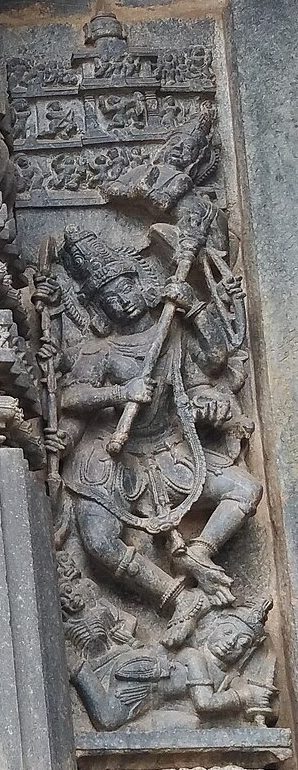
Grown into a mighty king through penance and boons, Andhaka came to desire Parvati, not knowing she was his mother. War followed. Each drop of his blood that touched the ground rose as a new Andhaka, until the divine mothers, the Matrikas, drank the blood before it fell, and Shiva lifted him high on his trishul.
Held there, the asura’s pride burned away. He praised Shiva, his sight was restored, and in several tellings he was accepted among the ganas as the devotee Bhringi.
SourceShiva Purana, Rudra Samhita (Yuddha Khanda); versions also in the Kurma, Matsya and Linga Puranas, which differ on who drinks the blood.
Story 3 of 14
Jalandhara and Vrinda जलन्धर और वृन्दा
When Indra once raised his thunderbolt against Shiva, who stood disguised in his path, the fire of Shiva’s anger was cast into the sea where the Ganga meets the ocean. From it a boy was born. The ocean raised him, Brahma named him Jalandhara, and he grew into an asura emperor who drove the gods from heaven.
His strength rested on the virtue of his wife Vrinda, a woman of unshakeable faithfulness. When Jalandhara coveted Parvati and made war on Kailash, Vishnu took Jalandhara’s form and went to Vrinda. Her vow was broken, and Shiva then slew Jalandhara with a blazing discus he drew on the water.
Vrinda cursed Vishnu to become a stone, remembered as the shaligram, and gave up her life. Tradition holds that the tulsi plant grew from her, which is why tulsi is wedded to Vishnu each year.
SourceShiva Purana, Rudra Samhita (Yuddha Khanda); a related telling is in the Padma Purana. Temple lore links the Kirtimukha face to Jalandhara’s messenger Rahu.
Story 4 of 14
Gajasura and the lord clothed in hide गजासुर और कृत्तिवास
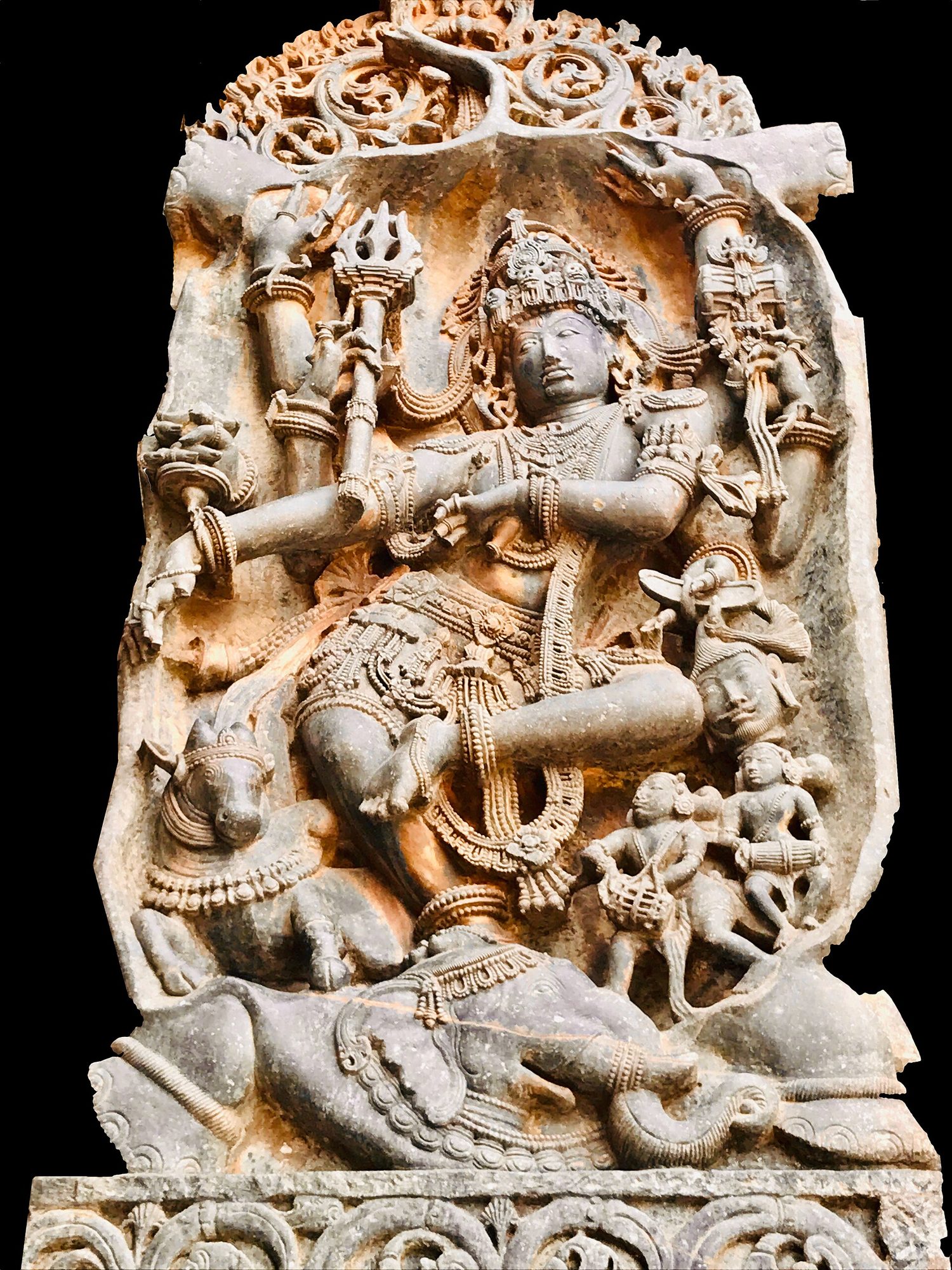
An asura in the form of a great elephant, Gajasura, made the gods and sages tremble and came at last to Kashi, where devotees had gathered around the linga. As he charged, Shiva burst out of the linga, tore the elephant apart and wrapped himself in its wet hide.
Dying, the asura asked one favour: that Shiva wear his skin for ever, and that the linga where he fell carry his memory. So the Lord of Kashi is also Krittivasa, “he whose garment is a hide”, and the shrine of Krittivaseshvara stands in Varanasi to this day.
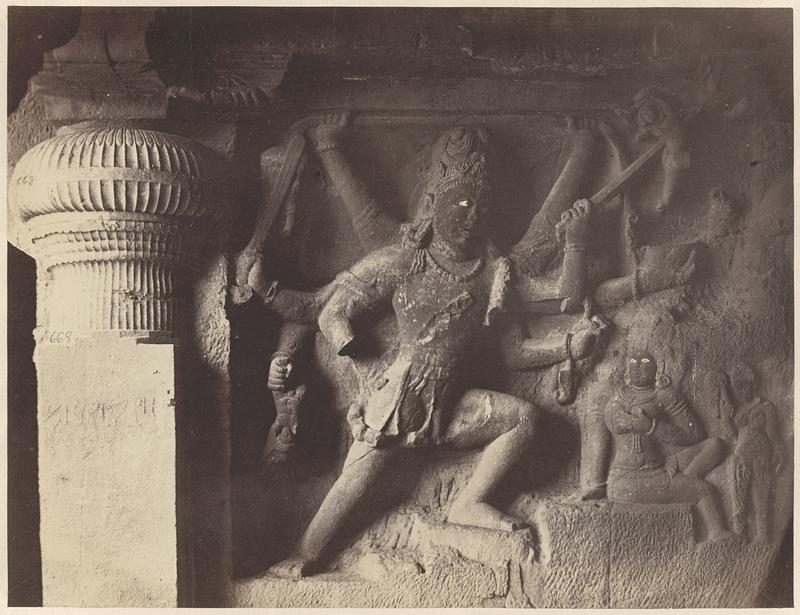
Sculptors love the scene. Chola and Hoysala temples show Gajasurasamhara-murti dancing inside the stretched elephant skin, the beast’s head under one foot, while a frightened Parvati turns away.
SourceKurma Purana and the Kashi Khanda of the Skanda Purana; the elephant-hide motif is older, found in the Shatarudriya and the epics.
Story 5 of 14
The hunter and the archer किरात और अर्जुन
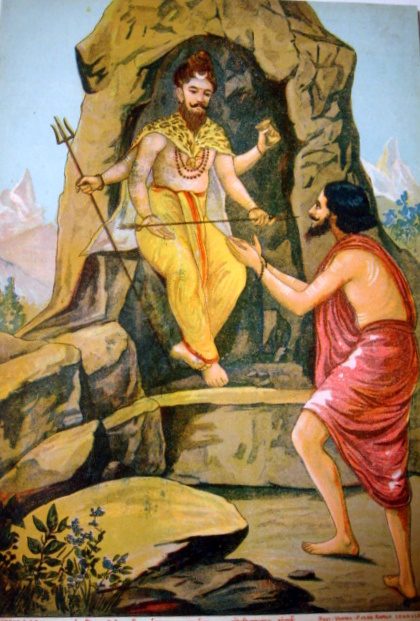
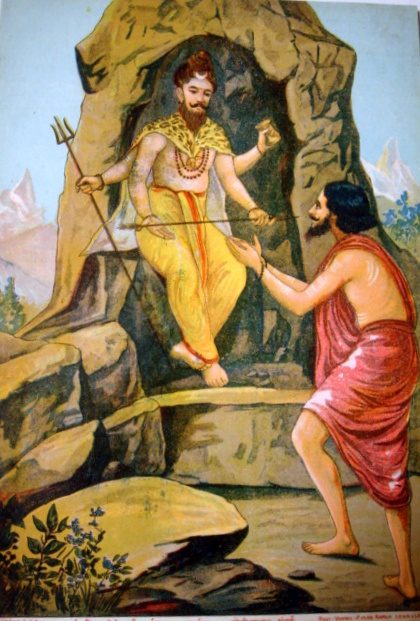
During the Pandavas’ exile, Arjuna went to the Himalaya to win divine weapons and sat in hard penance. One day a demon in the form of a boar charged him. Arjuna shot it, and in the same instant so did a wild mountain hunter, a kirata, who had appeared with his wife and companions.
Both claimed the kill. They quarrelled, then fought. Arjuna’s arrows vanished into the hunter, his bow was snatched away, and even in wrestling he was overpowered. Arjuna made a linga of earth and offered it a garland, then saw the garland on the hunter’s head. He knew whom he had fought.
Shiva, pleased by his courage, revealed himself with Parvati and gave him the Pashupatastra, his own invincible weapon. Bharavi turned the episode into the Sanskrit court poem Kiratarjuniya.
SourceMahabharata, Vana Parva (Kairata section); retold in Bharavi’s Kiratarjuniya (c. 6th century CE) and the Shiva Purana, Shatarudra Samhita.
Story 6 of 14
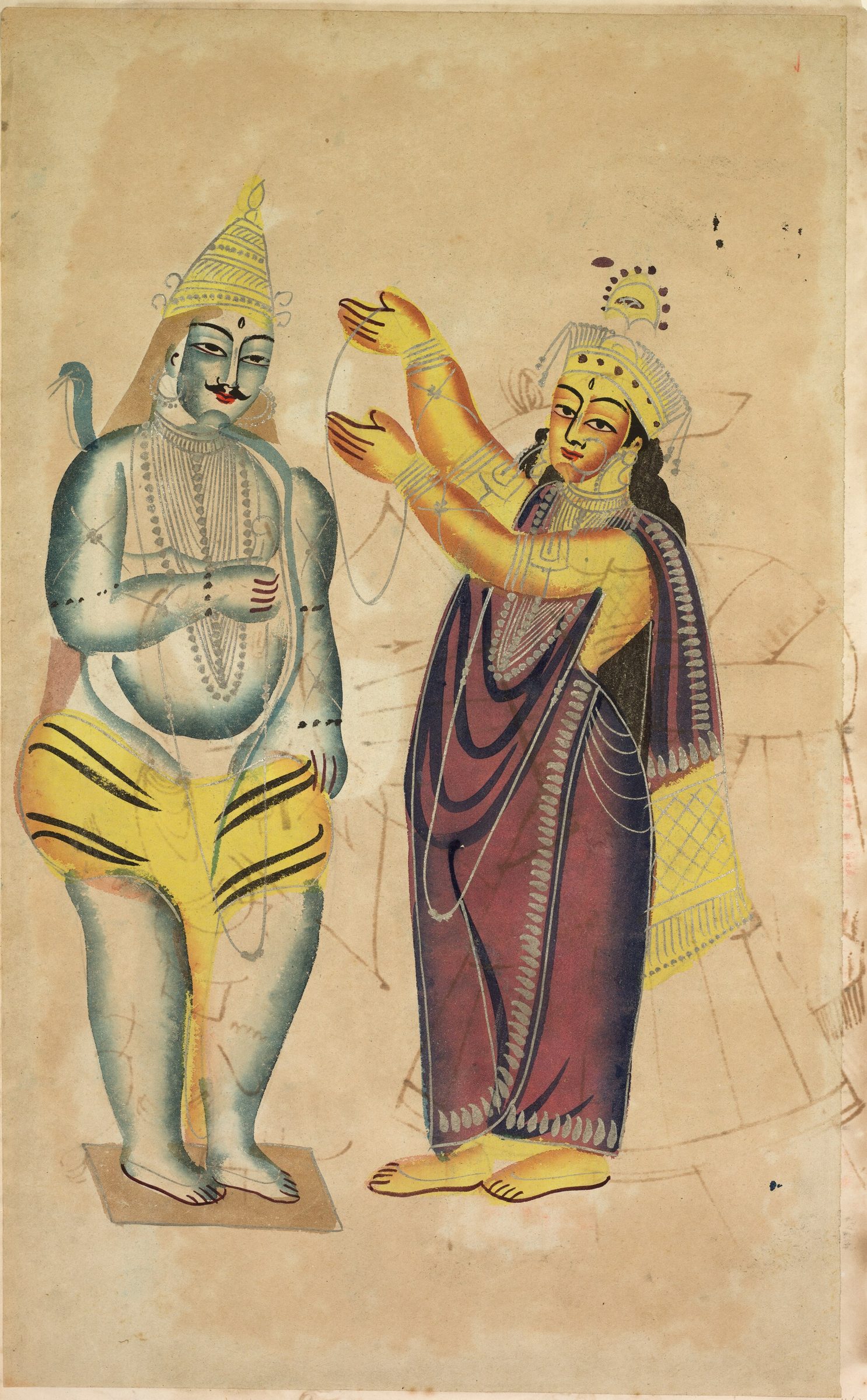
The wedding of Shiva and Parvati शिव-पार्वती विवाह
After Sati’s death, Shiva withdrew into meditation. Sati was reborn as Parvati, daughter of Himavan and Mena, and set her heart on him. When even Kama’s arrow failed, she turned to tapas, fasting in the heat and the snow until the gods themselves were moved.
Shiva came to her disguised as an old ascetic and mocked the god she loved, his ashes, his serpents and his burning-grounds. Parvati would not hear it and rose to leave, and Shiva revealed himself. The seven sages carried the proposal to Himavan. Mena fainted at the sight of the wild wedding party of ganas, until Shiva appeared in radiant form as Chandrashekhara.
In Garhwal, tradition holds that the wedding took place at Triyuginarayan, above Sonprayag. Vishnu gave the bride away as her brother, Brahma was the priest, and the fire they circled is said to have burned there for three ages.
SourceShiva Purana, Rudra Samhita (Parvati Khanda); Kalidasa’s Kumarasambhava. The Triyuginarayan setting is Garhwali temple tradition; the Purana places the wedding in Himavan’s city.
Story 7 of 14
The birth of Ganesha गणेश जन्म
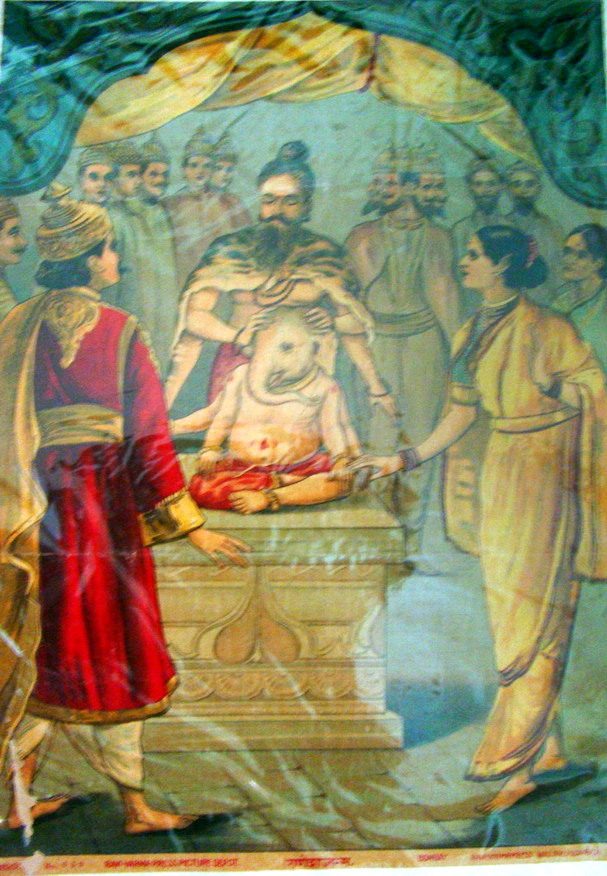
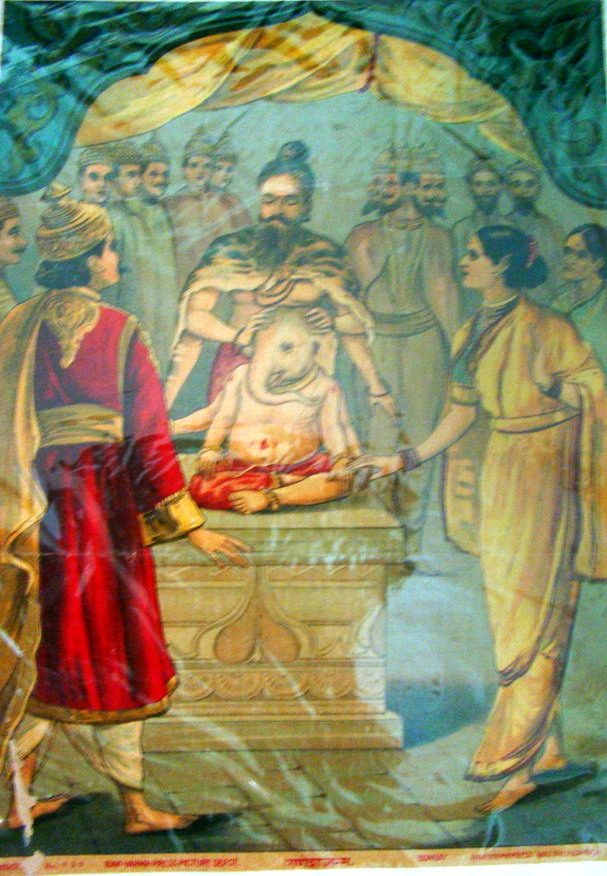
While Shiva was away, Parvati wished for a guard of her own. From the turmeric paste she had rubbed on her body she shaped a boy, gave him life, and set him at her door with orders to let no one in.
When Shiva returned, the boy barred his way. The ganas could not move him, nor could the gods. At last Shiva, in anger, struck off his head. Parvati’s grief and fury shook the worlds, and Shiva promised to restore her son. His ganas went north and brought back the head of the first creature they found, an elephant.
Shiva set it on the boy, brought him back to life, and made him Ganapati, lord of the ganas, to be worshipped first before any other god. That is why every Hindu rite still begins with Ganesha.
SourceShiva Purana, Rudra Samhita (Kumara Khanda). The Brahmavaivarta Purana tells a different version, in which the head is lost to the gaze of Shani.
Story 8 of 14
The birth of Kartikeya कार्तिकेय जन्म
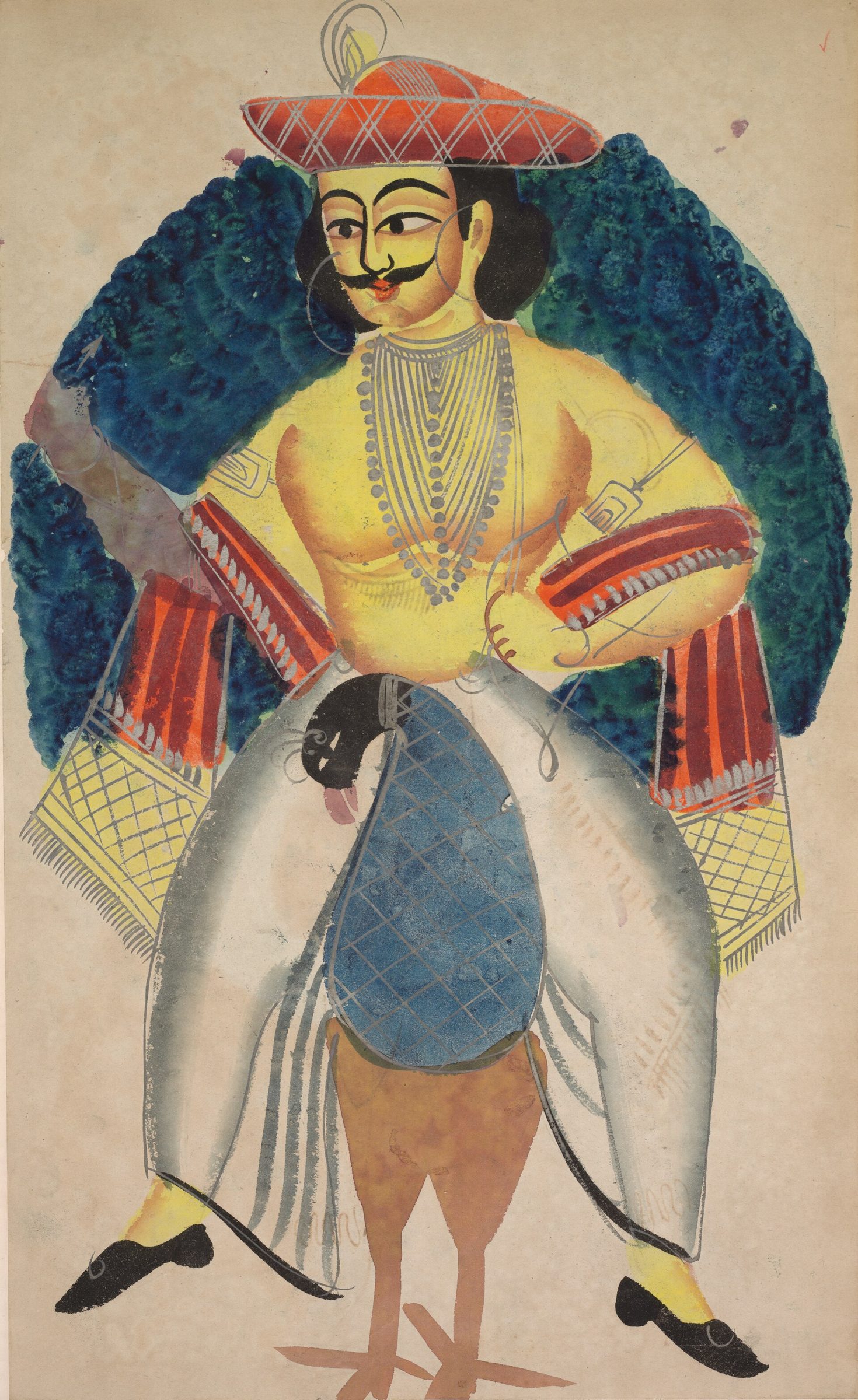
The asura Taraka had won a boon that only a son of Shiva could kill him, at a time when Shiva sat in endless meditation. After the marriage with Parvati, the gods waited for that son. Shiva’s seed was so fiery that Agni could not hold it; it passed to the Ganga, who left it in a forest of reeds, Saravana.
There a child of light was born. Six star-maidens, the Krittikas, came to nurse him, and he grew six faces to drink from each, so he is Shanmukha and Kartikeya. Made commander of the gods’ army, the boy rode his peacock into battle and killed Taraka.
A well-loved tale tells of the brothers racing around the world for a prize. Kartikeya set off on his peacock; Ganesha simply walked around his parents, saying they were his world, and won.
SourceShiva Purana, Rudra Samhita (Kumara Khanda); Mahabharata, Vana Parva; Skanda Purana; Kalidasa’s Kumarasambhava. In Tamil tradition the prize is a mango and the hurt Murugan goes to Palani.
Story 9 of 14
Bhringi and the half-woman lord भृंगी और अर्धनारीश्वर
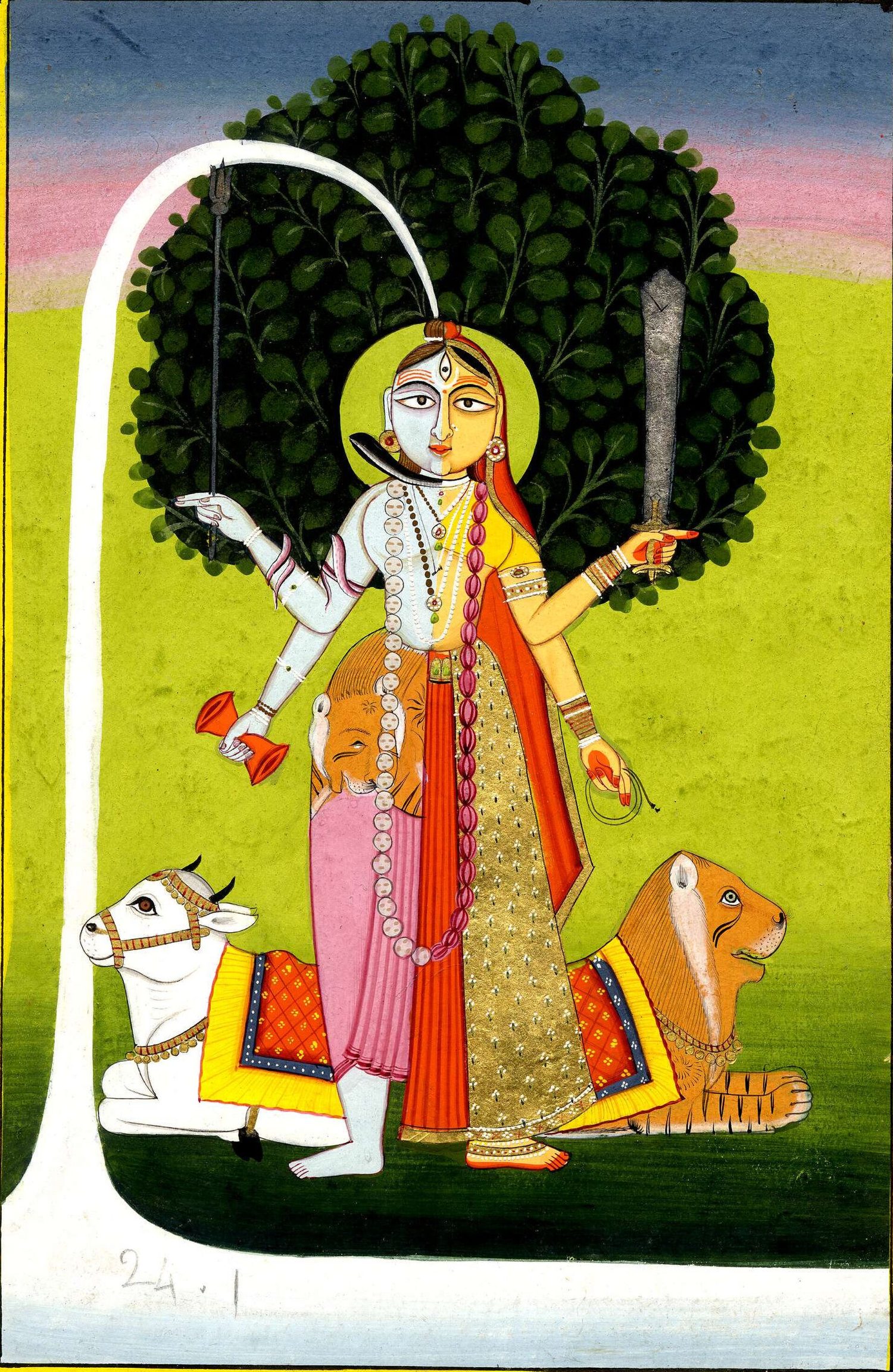
The sage Bhringi loved Shiva so single-mindedly that when he walked around Kailash in worship, he went round Shiva alone and left Parvati out. To teach him, Parvati sat so close to Shiva that no gap remained. Bhringi took the form of a bee, bhringa, and drilled his way between them.
Parvati then withdrew from him all that a mother gives the body, the flesh and blood. Bhringi was left a skeleton who could barely stand, and Shiva, in pity, gave him a third leg. That is how he is carved, thin and three-legged, dancing beside his lord.
Then Shiva joined Parvati to himself, half man and half woman, as Ardhanarishvara. Shiva without Shakti, the story says, cannot be worshipped at all.
SourceTold in temple tradition and later Puranic retellings, including Tamil sthala puranas. The Ardhanarishvara form itself is far older, seen in Kushan-era sculpture from Mathura (c. 1st–2nd century CE).
Story 10 of 14
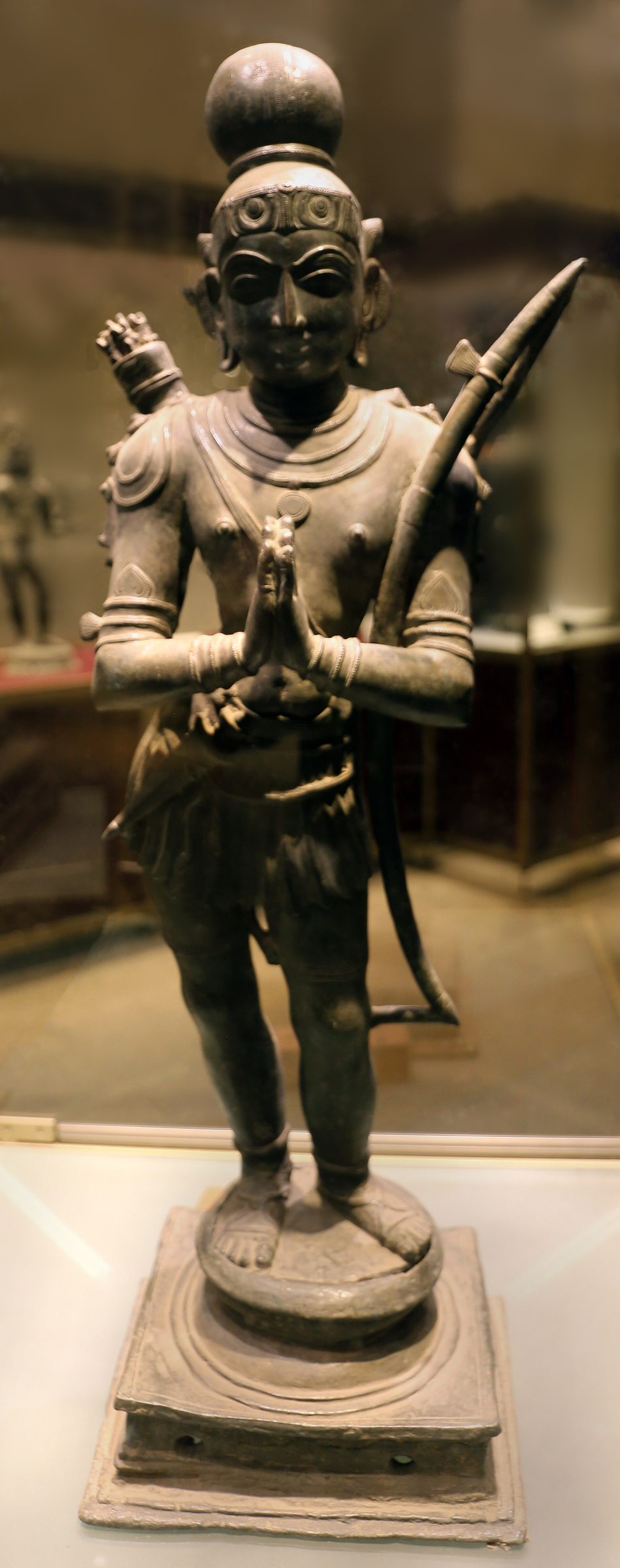
Kannappa, the hunter who gave his eyes कण्णप्प
Thinnan was a young hunter of the hills who found a linga in the forest at Srikalahasti and loved it at first sight. He knew no rituals. He carried water in his mouth to bathe it, brought flowers tucked in his hair, and offered the best of his roasted meat, tasted first to be sure it was good.
The temple priest was horrified at each morning’s mess, until Shiva let him watch from hiding. That day blood began to flow from one eye of the linga. Thinnan, without a thought, cut out his own eye with an arrow and pressed it into place. The bleeding stopped, and then the other eye began.
He set his foot on the linga to mark the spot, since he would soon be blind, and raised the arrow again. Shiva’s hand stopped his: “Stay, Kannappa.” He is one of the sixty-three Nayanar saints.
SourcePeriya Puranam of Sekkizhar (12th century CE), the Tamil lives of the 63 Nayanars; Kannappa is also praised in the Tevaram hymns.
Story 11 of 14
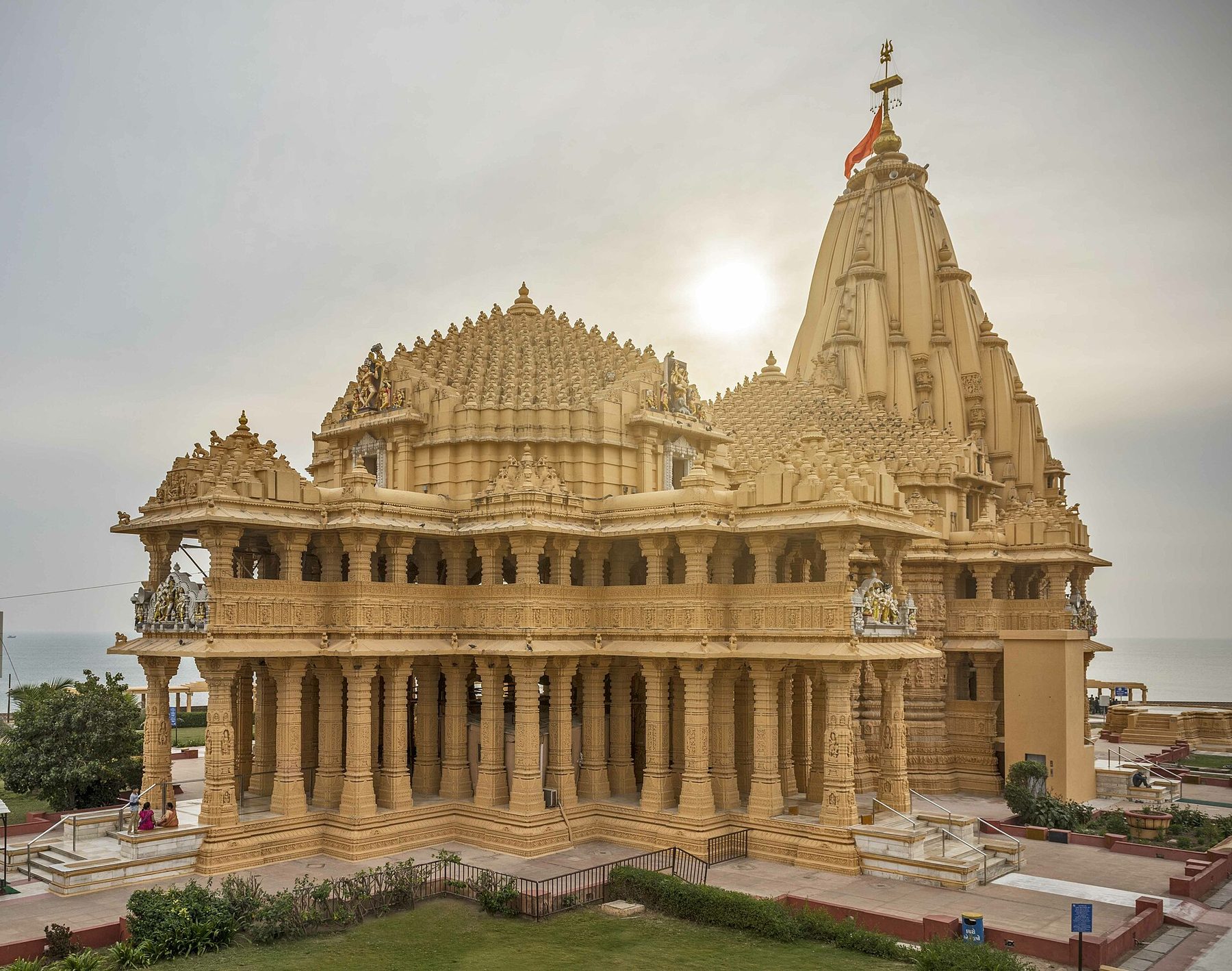
The moon’s curse and Somnath चन्द्र का शाप और सोमनाथ
Daksha gave twenty-seven daughters, the lunar mansions, in marriage to Chandra, the moon. But Chandra loved only Rohini and neglected the rest. When they complained, Daksha cursed him to waste away, and the moon began to fade from the sky.
On Brahma’s advice Chandra went to Prabhasa on the coast of Saurashtra and worshipped Shiva for a long time. Shiva could not undo a father’s curse, but he softened it: the moon would wane for one fortnight and wax again for the next. Shiva then took the crescent onto his own head.
The linga at Prabhasa became Somnath, “Lord of Soma”, first in the list of twelve Jyotirlingas. In history the temple was raided by Mahmud of Ghazni in 1026, rebuilt many times, and the present temple was consecrated in 1951.
SourceShiva Purana, Koti Rudra Samhita; Skanda Purana, Prabhasa Khanda. Garhwali tradition places part of Chandra’s penance at Chandrashila above Tungnath (see the Legends page).
Story 12 of 14
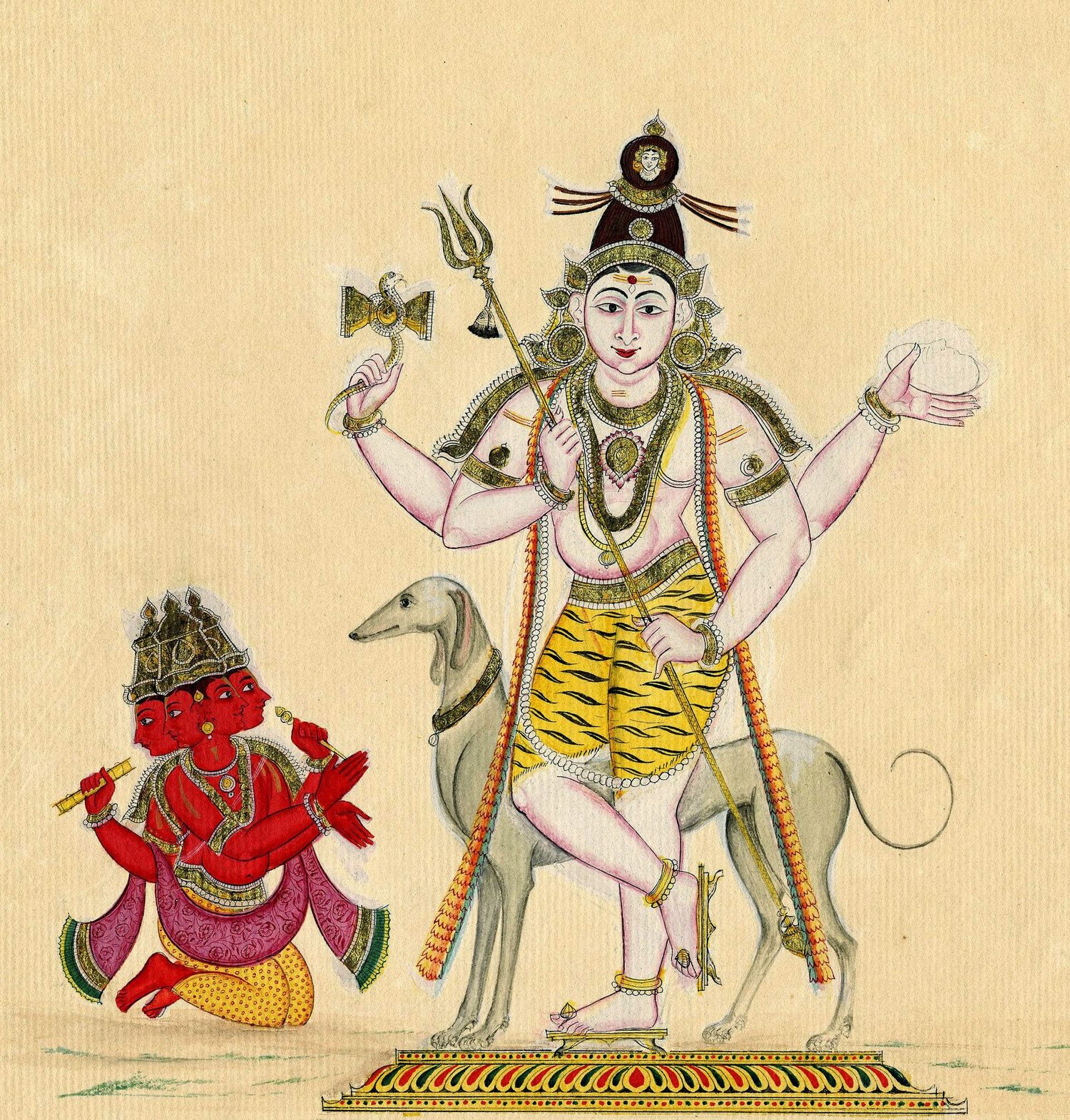
Brahma’s fifth head and the skull that fell at Kashi कपालमोचन
Brahma once had five heads. In a dispute over who was supreme, the fifth head spoke arrogantly against Shiva. From Shiva’s wrath came Bhairava, fierce and dark, who nipped off that head with the nail of his finger.
But to cut off Brahma’s head was to carry the sin of killing a brahmin. The skull stuck fast to Bhairava’s hand, and a fearsome figure, Brahmahatya, followed him everywhere. He wandered the worlds as a naked beggar, Bhikshatana, the skull as his bowl.
Only when he entered Kashi did Brahmahatya fall back, and the skull dropped from his hand at a pool remembered as Kapalamochana, “release of the skull”. Bhairava stayed on as Kala Bhairava, the kotwal or guardian of Kashi, whom pilgrims visit to take leave of the city.
SourceShiva Purana, Shatarudra Samhita; Kurma Purana; Skanda Purana, Kashi Khanda. Other places, such as Kapal Mochan in Haryana, hold their own traditions of the skull’s release.
Story 13 of 14
Ravana and the atmalinga आत्मलिंग और गोकर्ण
Ravana, a great devotee, won from Shiva his own atmalinga, the linga of his very self, on one condition: it must never touch the ground before it reached Lanka, or it would stay where it was set down. The gods feared what Ravana would become with it.
As he travelled south along the western coast, Vishnu dimmed the sun so it seemed like evening. Ravana had to perform his sandhya prayers. A brahmin boy happened by, and Ravana asked him to hold the linga. The boy, Ganesha in disguise, called out three times and then set it down.
Ravana pulled with all his strength. The linga twisted into the shape of a cow’s ear, gokarna, and would not move. It is worshipped at Gokarna in Karnataka as Mahabaleshwar, “the very strong”.
SourceGokarna Mahatmya of the Skanda Purana and local tradition. The Shiva Purana, Koti Rudra Samhita, tells a similar story of Ravana’s linga at Vaidyanath instead.
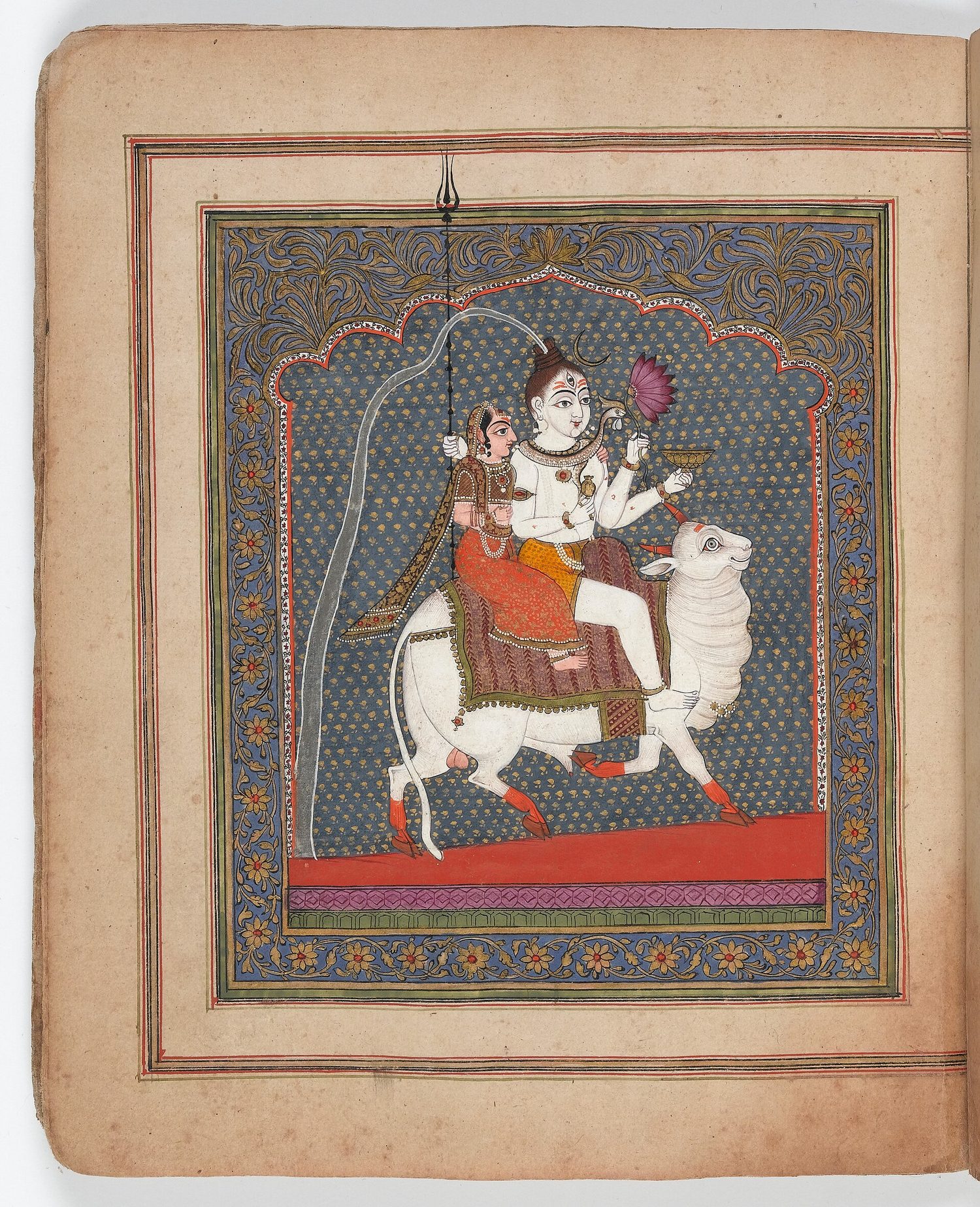
Story 14 of 14
Upamanyu and the ocean of milk उपमन्यु
Upamanyu was the son of a poor sage. As a small boy he tasted milk once at a relative’s house and longed for more. His mother, with nothing to give, mixed flour in water and told him that only Shiva could give him real milk.
The boy went into the forest and began a long and hard penance. Shiva came to test him, disguised as Indra on his white elephant, offering every heavenly gift if he would turn from Shiva. Upamanyu refused, ready to die rather than worship anyone else.
Shiva then showed his true form and gave the boy an ocean of milk, undying youth and a place among the ganas. In the Mahabharata it is the grown sage Upamanyu who later initiates Krishna into the worship of Shiva.
SourceMahabharata, Anushasana Parva; Shiva Purana. This is a different Upamanyu from the obedient pupil of Dhaumya in the Adi Parva.
Sources
- Shiva Purana, Rudra Samhita (Parvati, Kumara and Yuddha Khandas); Shatarudra Samhita; Koti Rudra Samhita
- Skanda Purana, Kashi Khanda, Prabhasa Khanda and Gokarna Mahatmya
- Kurma, Linga, Matsya, Padma and Brahmavaivarta Puranas
- Bhagavata Purana 10.88 (Vrikasura)
- Mahabharata, Vana Parva and Anushasana Parva
- Bharavi, Kiratarjuniya (c. 6th century CE)
- Kalidasa, Kumarasambhava
- Sekkizhar, Periya Puranam (12th century CE)
- Wendy Doniger O’Flaherty, Hindu Myths (1975) and Siva: The Erotic Ascetic (1973)
- Stella Kramrisch, The Presence of Siva (1981)
- Diana L. Eck, Banaras: City of Light (1982)
These are sacred stories, told as tradition holds them; versions differ between texts and regions. Artworks are public domain or openly licensed; see credits.