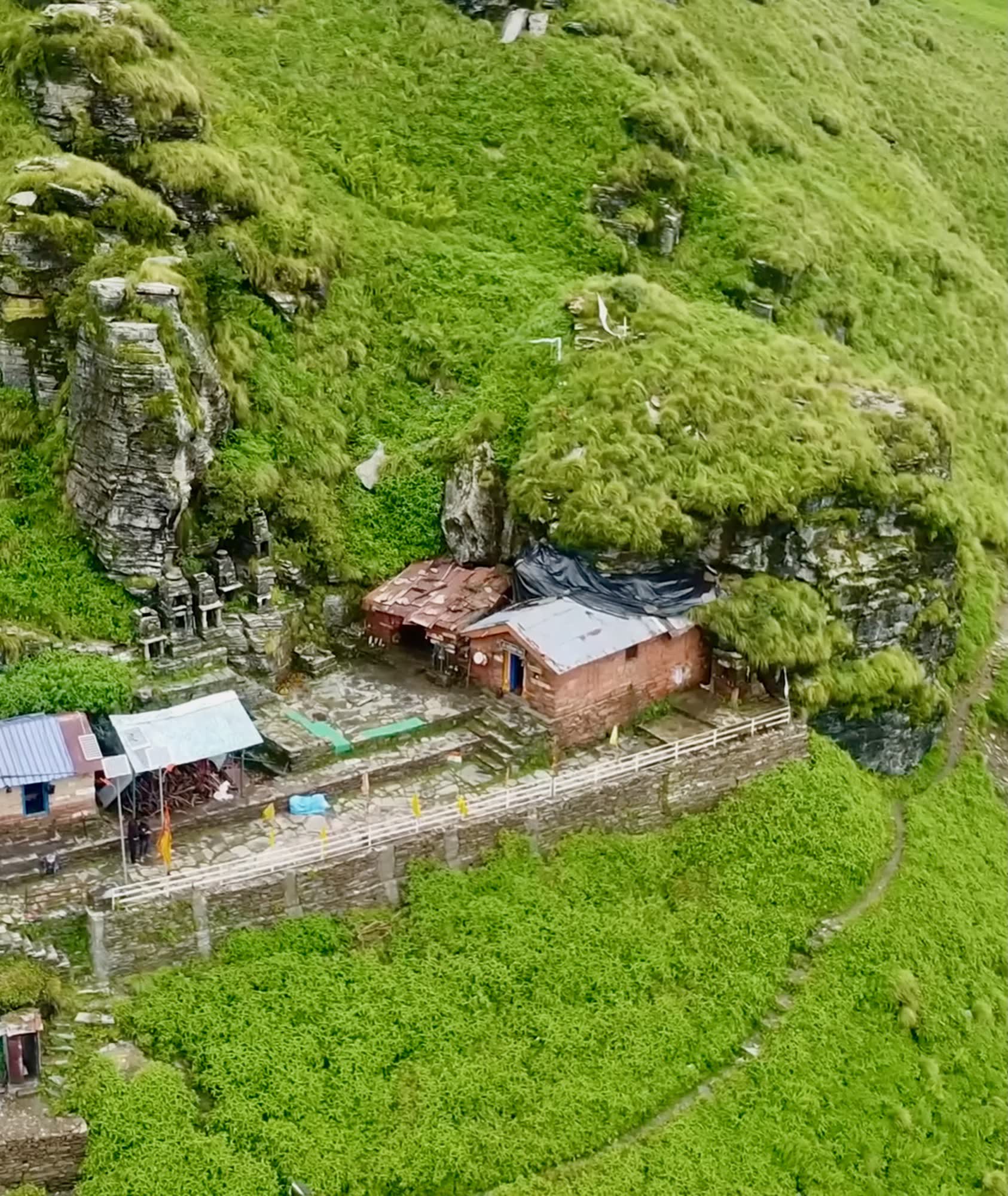
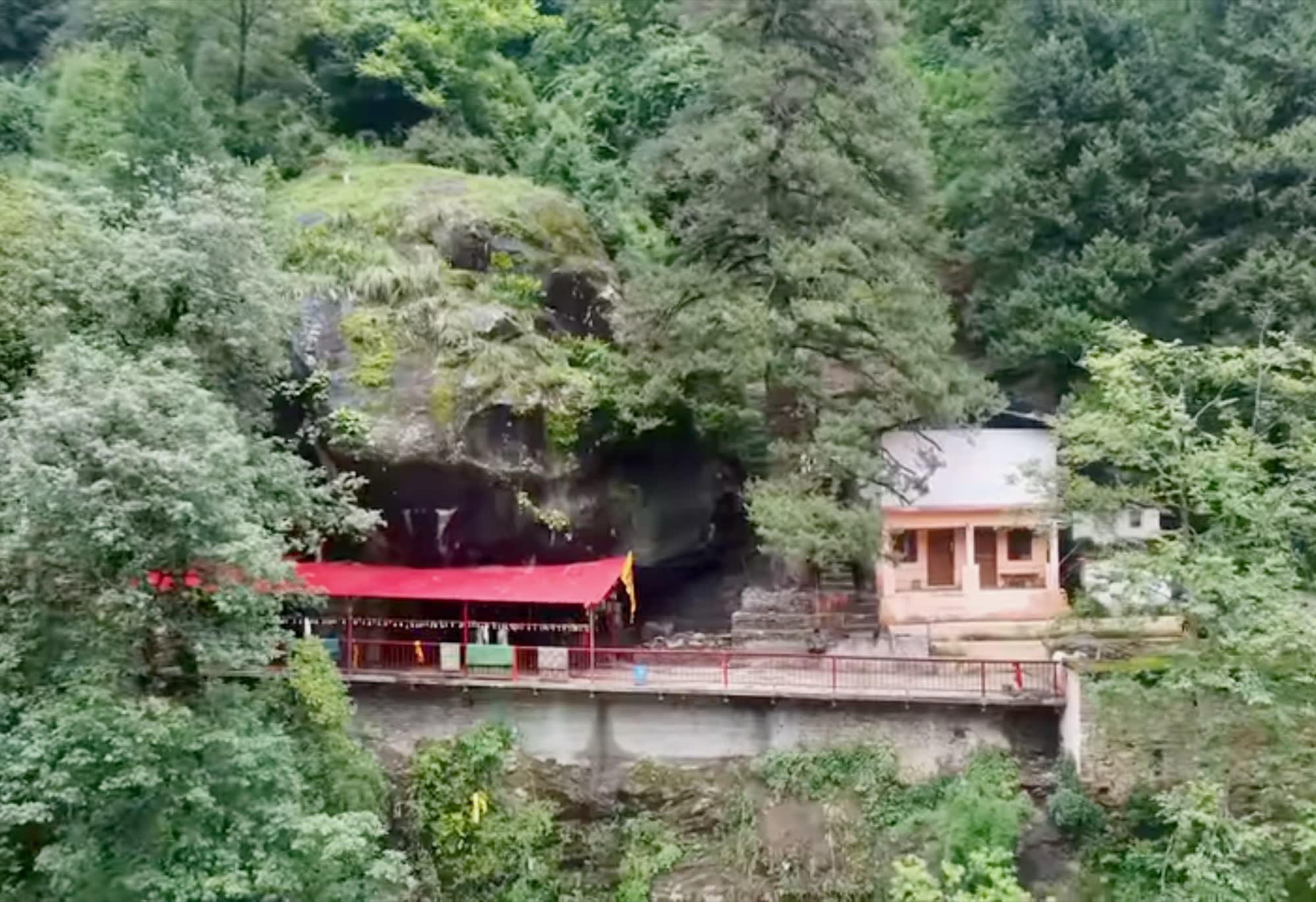
The stories behind the five shrines. Twenty-two legends from the Puranas, the temple families and the villages of Garhwal, each marked with where it comes from.
Prologue
The land of Kedar
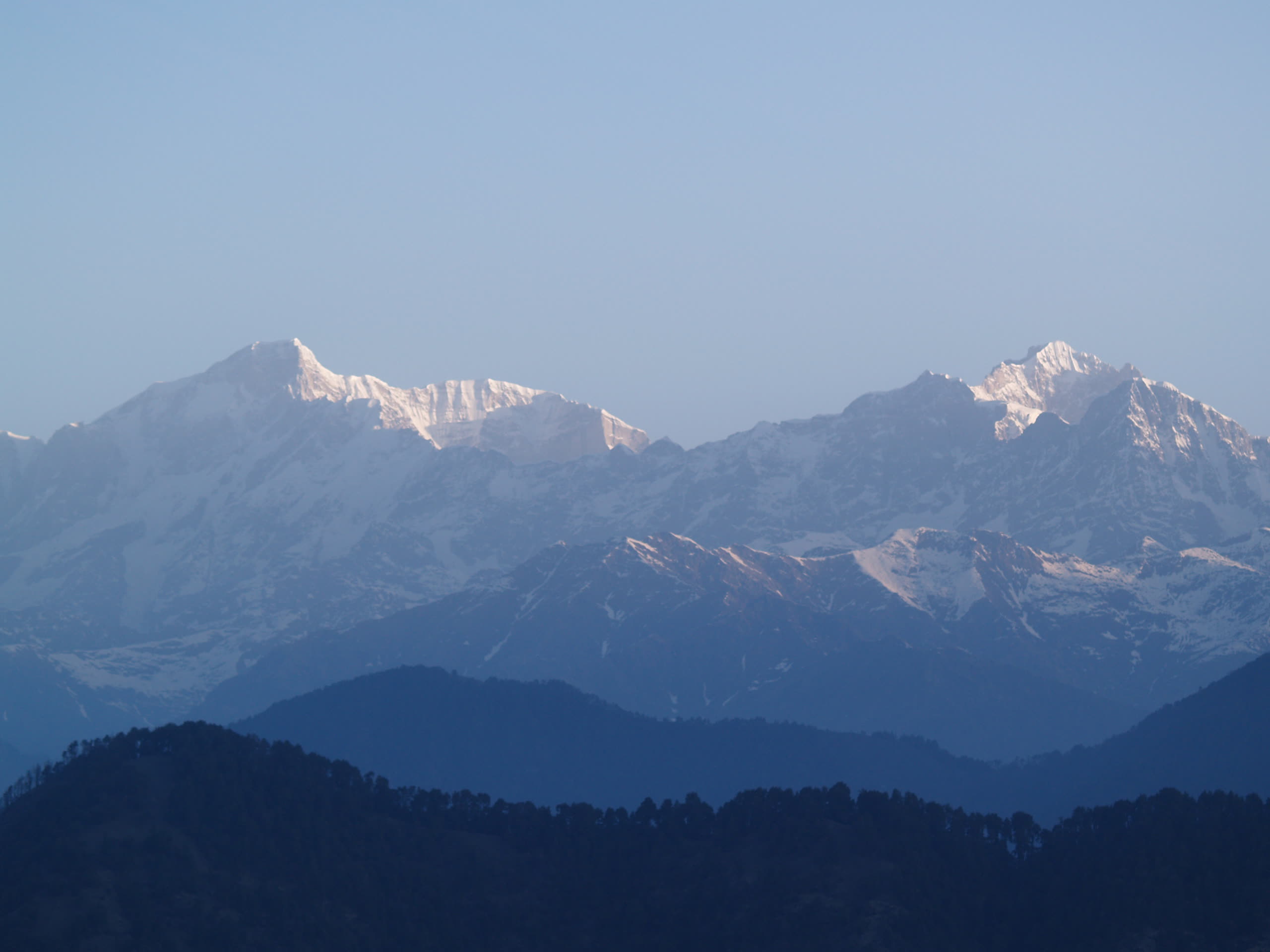
Garhwal was once called Kedarkhand, the land of Kedar. The Skanda Purana describes it as a land where every stream is the Ganga and every stone is Shiva.
Its best-known story begins after the Mahabharata war. The Pandavas had won, but they had killed cousins, teachers and elders to do it. On the sage Vyasa’s advice they went north to seek Shiva’s forgiveness. Shiva did not wish to grant it so easily, so he hid from them, first at Kashi and then in the Garhwal hills, disguised as a bull among the cattle at Guptkashi.
Bhima saw through it, and the god dived into the earth. His body came up again in five places, and the five temples of the Panch Kedar stand there today. The Pandavas built a shrine at each, and only then, the story says, were they free to begin the last journey north, towards the Himalaya and heaven.
First Kedar · Shiva’s hump · 3,583 m१
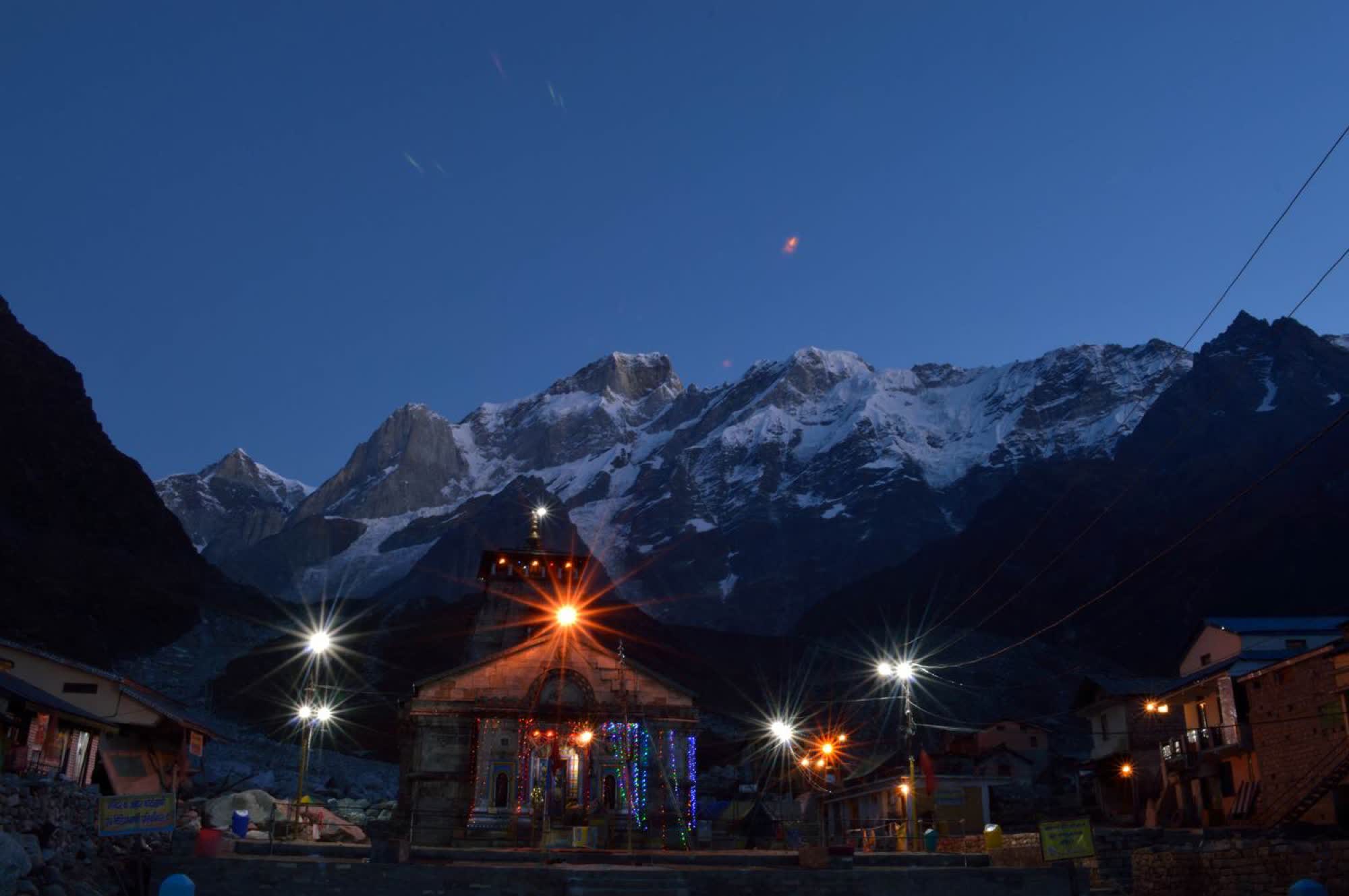
Kedarnath
केदारनाथ · पृष्ठ भाग (कूबड़)
Nara and Narayana call Shiva to the snows
Long before the Pandavas, two sages lived in the Badrikashrama hermitage. They were Nara and Narayana, who are said to be forms of Vishnu himself. Every day they shaped a lingam from the earth and worshipped Shiva in it, through summer and through snow.
Shiva was so moved by their devotion that he appeared before them and offered them a boon. They did not ask for anything for themselves. They asked him to stay in that place for ever, so that anyone who came would find him there. Shiva agreed and took his place in the high valley as Kedareshwara, one of the twelve Jyotirlingas, the pillars of light.
The hump of the bull
When Shiva, in the form of a bull, plunged into the earth to escape Bhima, its hump stayed above the ground at Kedarnath. That is why the lingam here is not the smooth, rounded form found in most Shiva temples. It is a rough, three-sided rock, read as the back of the bull.
Pilgrims still touch and embrace it, and smear it with ghee, as if soothing the bruised back of the god who was caught.
Adi Shankaracharya’s last journey
In the 8th century, the philosopher Adi Shankaracharya walked the length of India reviving its old pilgrim places. Tradition credits him with rebuilding the grey stone temple that stands at Kedarnath today. It also says the Rawal, the chief priest, has come ever since from the Veerashaiva Jangam community of Karnataka.
He is said to have reached Kedarnath at the age of 32 and taken samadhi there. His samadhi shrine stands just behind the temple.
Bhairavnath keeps watch
On a ridge east of the temple stands the shrine of Bhairavnath, the kshetrapal or guardian of Kedarnath. When the doors close for winter and the valley is buried in snow, it is Bhairav who is believed to protect the empty temple.
So the season’s rituals begin and end with him. His worship comes first, and the doors are only sealed after he has been honoured.
The rock that stopped the flood
On the night of 16–17 June 2013, a glacial lake above Kedarnath burst. A wall of water and debris swept through the town and killed thousands of people.
A huge boulder came down with the flood and stopped a few metres behind the temple. The debris split around it, and the temple was left standing almost untouched. Pilgrims now worship the rock as Bhim Shila, Bhima’s stone, the protector who arrived with the flood.
The winter journey to Ukhimath
On Bhai Dooj, the movable idol of Kedarnath is placed in a decorated palanquin, the doli. It is carried down the mountain over several days, to the sound of drums and the army band. It stays the winter at Omkareshwar Temple in Ukhimath, and Kedarnath’s worship continues there until the summer doors open again.
Ukhimath is said to take its name from Usha, the daughter of the asura king Banasura. Tradition says she married Aniruddha, Krishna’s grandson, here, and their marriage altar is still shown inside the temple.
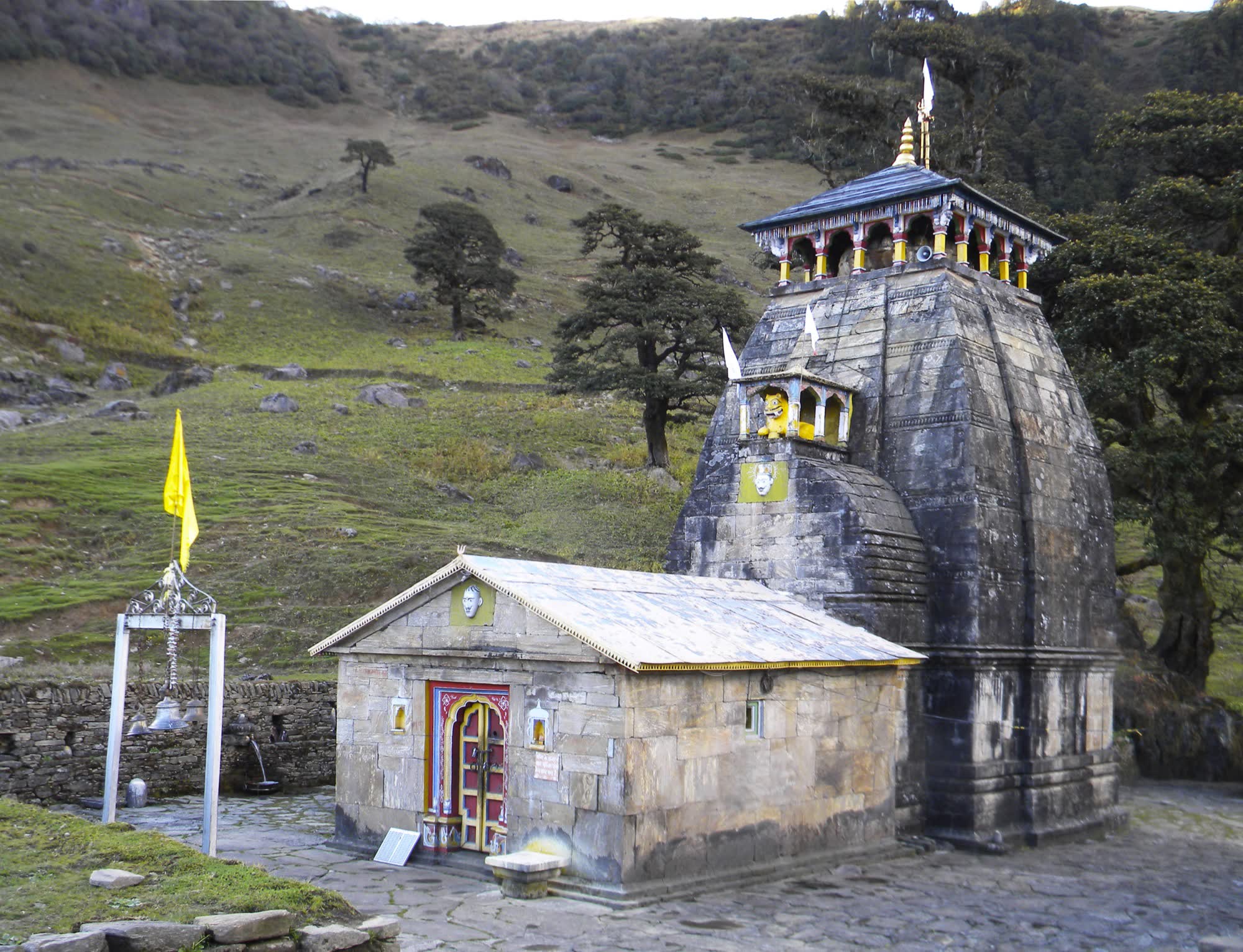
At Madhyamaheshwar, the “Lord of the Middle”, the navel and middle of the bull came up out of the earth. The lingam here is shaped like a navel. Tradition says Bhima built the first shrine, and worshipped here the god he had grabbed by the tail.
Water holy enough in a few drops
A spring flows beside the temple, and its water is counted among the holiest in the Himalaya. It is said to be so pure that a few drops sprinkled on the head are equal to a full ritual bath.
Pilgrims carry it home in small bottles for those who could not make the climb.
Buda Madhyamaheshwar — the Old Lord
Two kilometres above the temple, on an open meadow, stands a tiny shrine called Buda Madhyamaheshwar, the old Madhyamaheshwar. Villagers say it marks where the god was first worshipped, before the stone temple was built lower down.
Beside it lies a small pond that mirrors Chaukhamba and the Kedar peaks on a still morning. Many pilgrims feel it is the most peaceful place on the whole yatra.
The mela of the returning god
When the doors close in November, the doli of Madhyamaheshwar is carried down through the villages of the trail, through Gaundar and Ransi, to Ukhimath. There it shares the winter seat with Kedarnath.
Its arrival is celebrated with the Madmaheshwar Mela. Villagers from the whole valley come to welcome their god home for the winter.
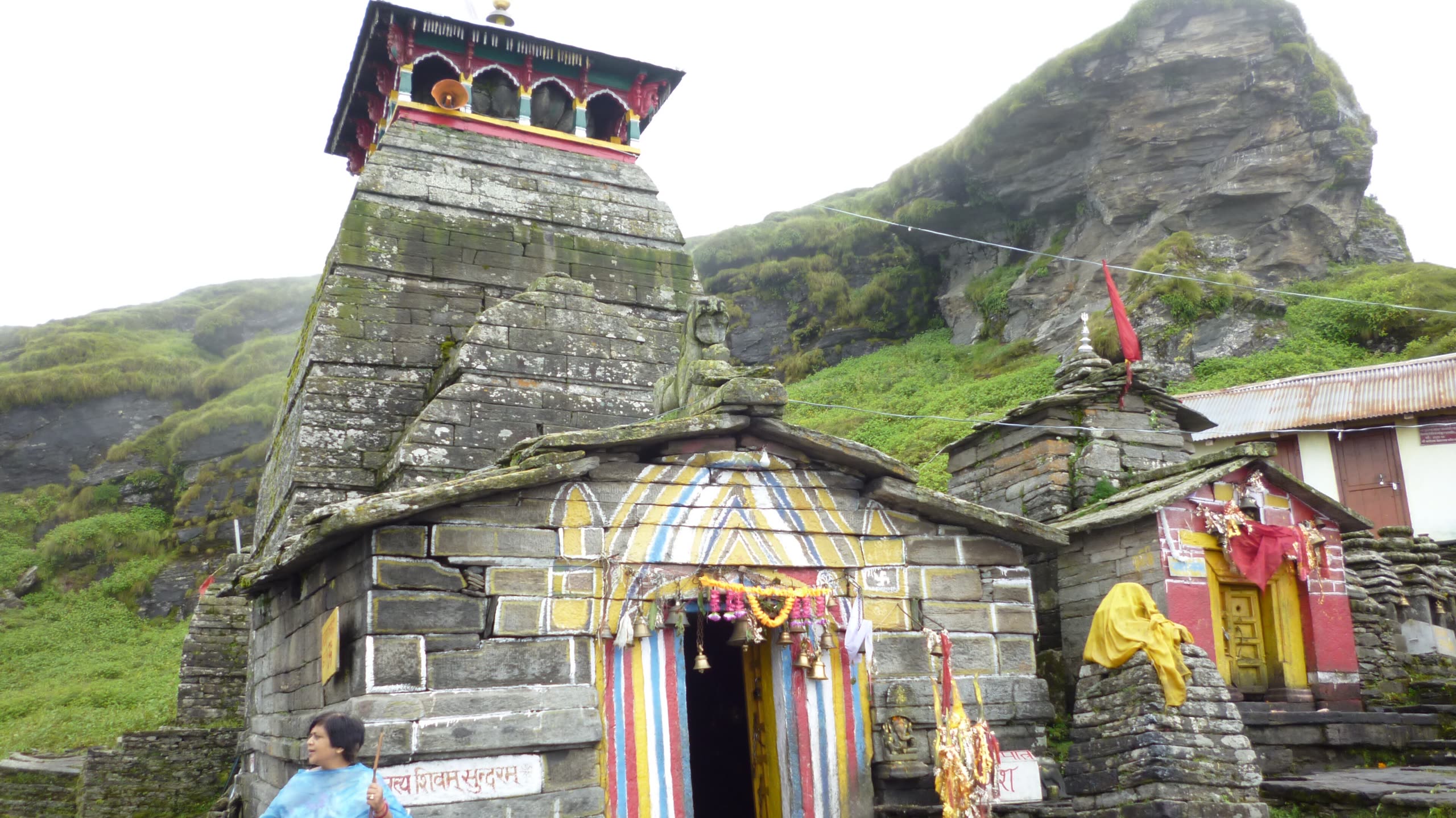
At Tungnath, the “Lord of the Peaks”, the arms of the bull came up out of the earth. Tradition says Arjuna, the great archer of the Pandavas, built the first temple here.
The present shrine, about a thousand years old, sits so high that for most of the year it stands in cloud. A Nandi waits outside, facing the god.
Rama on the Moon Rock
Above the temple rises Chandrashila, the Moon Rock. Local tradition holds that Rama came here after the war with Ravana. Ravana had been a learned Brahmin as well as a demon king, and Rama meditated on this summit to atone for killing him.
The moon’s penance
The summit also takes its name from Chandra, the Moon. The Puranas tell how Chandra married the 27 daughters of Daksha but loved only one of them, Rohini. Daksha cursed him to waste away.
Chandra prayed to Shiva to be freed from the curse. Shiva could not undo it completely, so he softened it: the moon would wane and then grow again. Local tradition places part of Chandra’s penance on this rock, the highest point of the whole yatra.
Priests from Makku
At Kedarnath and Madhyamaheshwar the priests come from the south of India. At Tungnath they come from the hills. The priests here are local Brahmins of Makku village.
In winter the deity is carried down to their village and worshipped at the Markandeya Temple, Makkumath. It is named after the sage Markandeya, who in legend defeated death through his devotion to Shiva.
At Rudranath the face of the bull came up out of the earth. It is worshipped as Neelkanth Mahadev, the blue-throated lord. The face is a natural rock inside a shallow cave. It was not carved, but is believed to have appeared by itself, and the priests dress it in flowers and silver.
The name Neelkanth recalls the churning of the ocean. When the gods and demons churned the cosmic sea, a deadly poison, halahala, rose first. Shiva drank it to save the worlds, Parvati held his throat so the poison would not go further, and it turned his throat blue.
The Vaitarani, river of the departed
Behind the temple flows a stream called the Vaitarani. In Hindu belief, the Vaitarani is the river every soul must cross after death on its way to Yama’s realm.
Here at Rudranath, families perform pind daan, offerings of rice balls for their ancestors. They believe that rites done on its bank help the souls of the departed cross in peace.
Pitradhar, the ridge of the ancestors
The trail crosses its highest point at Pitradhar, the ridge of the ancestors, at about 3,800 metres. Pilgrims stop here and set down small stones in memory of their parents and grandparents. Over generations these have grown into a field of little cairns.
Many walkers say it is the most moving moment of the whole Panch Kedar.
The trishul of Gopeshwar
In winter Rudranath is worshipped in Gopeshwar, at the old Gopinath Temple. A five-metre metal trishul stands in its courtyard, inscribed with letters more than a thousand years old.
Tradition says Shiva hurled it at Kamadeva, the god of desire, who had disturbed his meditation, and it has stood there ever since. People say that if you touch it with only your little finger, it trembles, but not if you push it with all your strength.
At Kalpeshwar, the last of the five, the jata, the matted locks of Shiva, came up out of the earth. The god is worshipped on a rock inside a small cave temple, reached across the Kalpganga stream.
Ganga came down from heaven into these same locks. Shiva caught her in his hair so that the force of her fall would not shatter the earth.
Durvasa under the wishing tree
The name Kalpeshwar comes from the kalpavriksha, the wish-granting tree that rose from the churning of the ocean.
Tradition says the fiery sage Durvasa meditated beneath such a tree in this valley, and so the place became the seat of the Lord of the Wishing Tree.
Urvashi born of a sage’s penance
Another story of the Urgam valley tells of the sage Arghya, who did such fierce penance here that he created Urvashi, the most beautiful of the apsaras, the celestial dancers.
The valley is still remembered as a place where tapasya, deep spiritual discipline, could bring wonders to life.
The Kedar that never closes
Every other Kedar goes into its winter seat when the snows come. Kalpeshwar does not. Its shrine stays open all twelve months, and the worship never stops.
For pilgrims who cannot wait for summer, it is the one place where Panch Kedar darshan is possible in the depths of winter. And just down the valley lies the road to Badrinath. Many end the whole yatra there, before Vishnu, as the Pandavas are said to have done on their last journey north.
These are traditional accounts, not historical claims. Sources are given as the text or community that tells each story. Where versions differ, the most widely told one is given.
This website is managed by
The Office of MushroomWale.com
A free, independent guide for Panch Kedar pilgrims, prepared and maintained from Uttarakhand. Temple bookings and donations go only through official channels — this site never collects money.