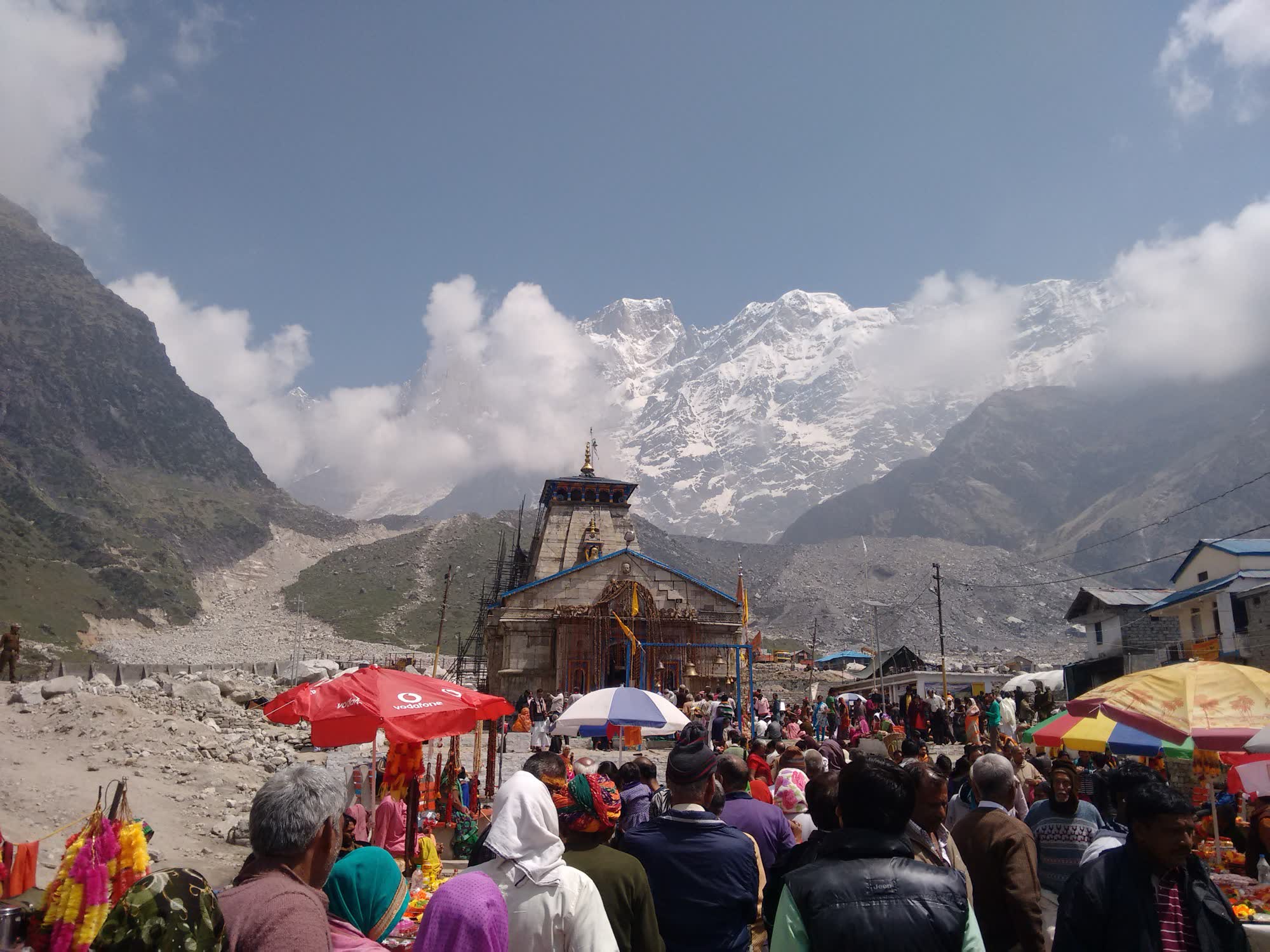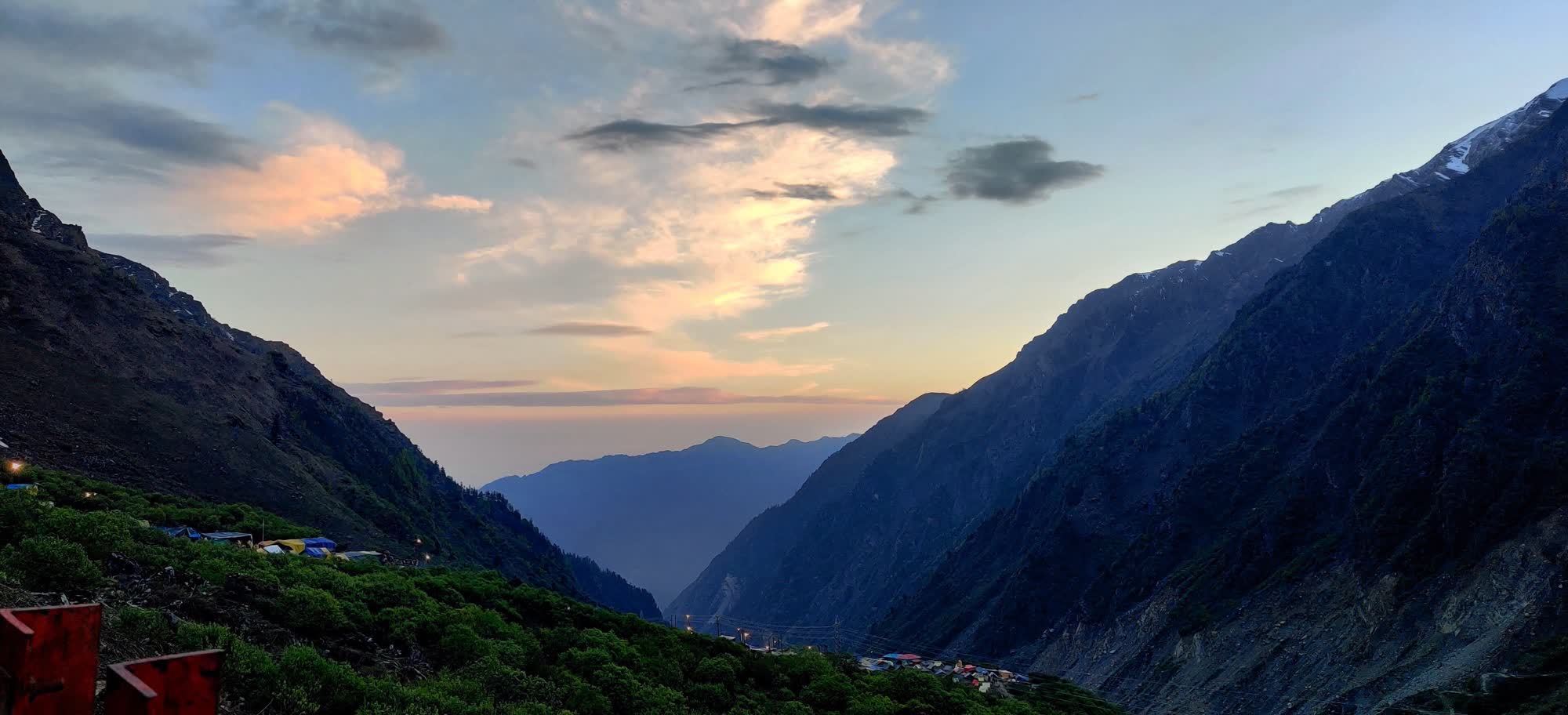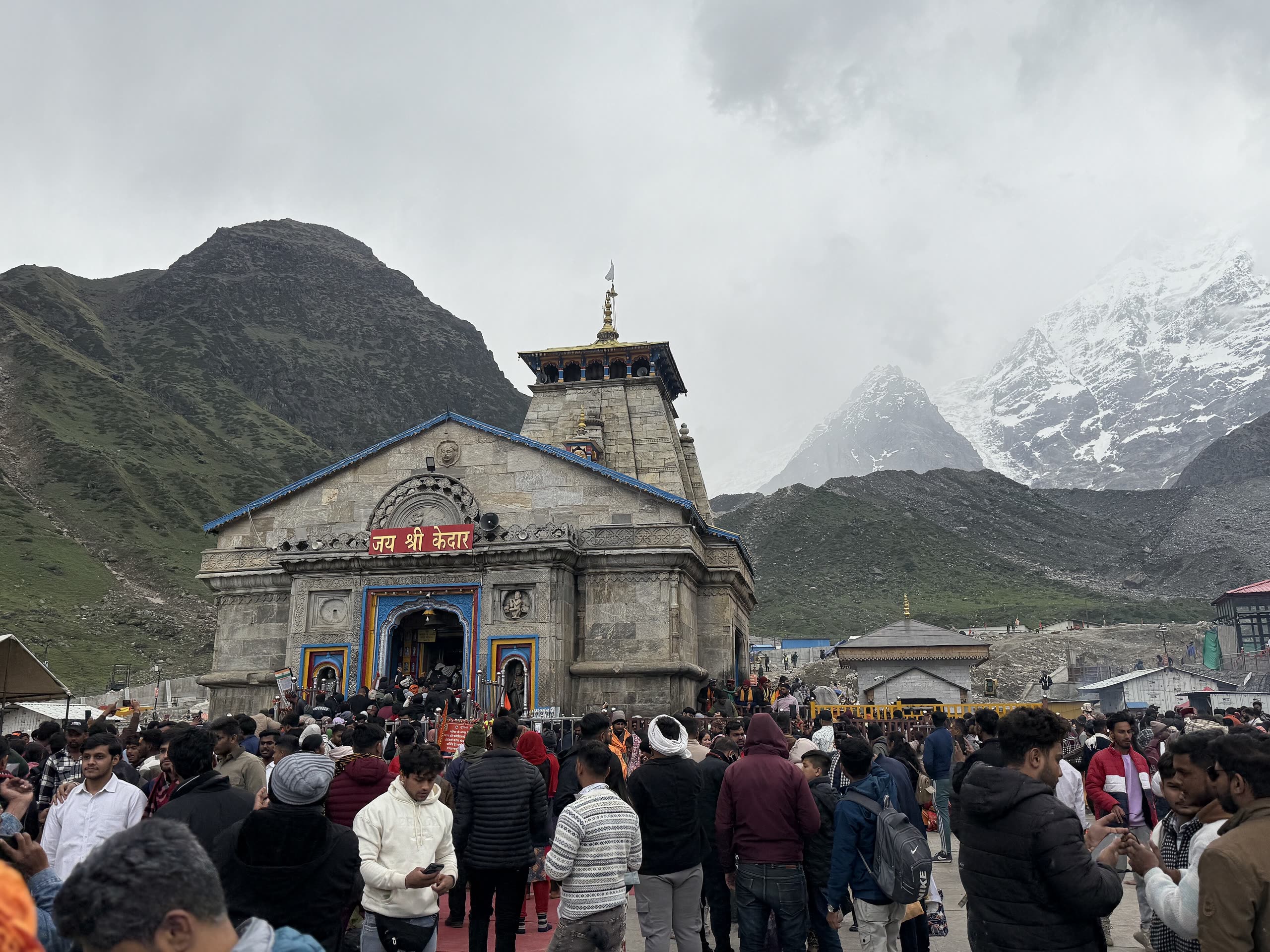
Kedarnath temple

Panch Kedar / First Kedar

केदारनाथ

Kedarnath

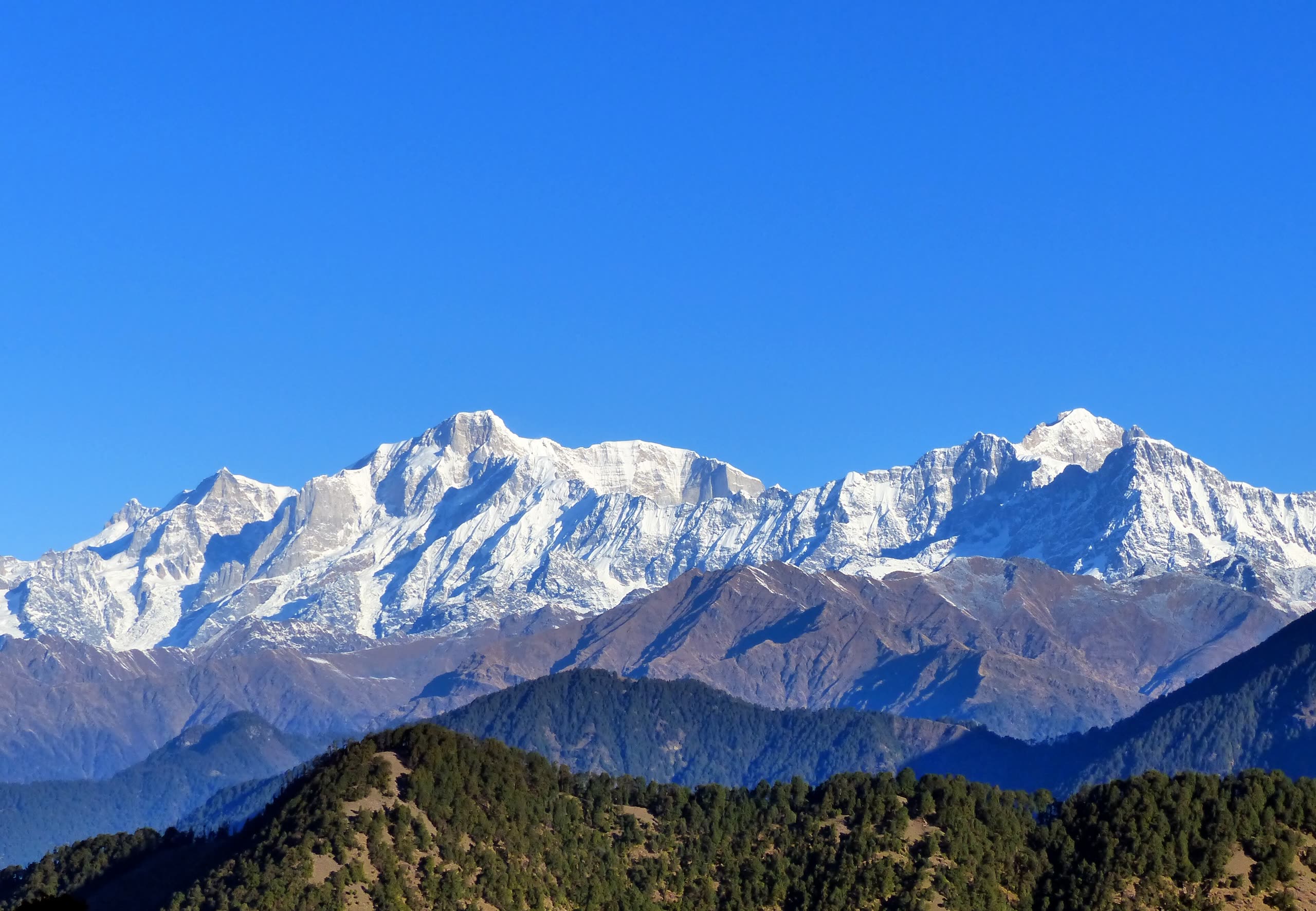
The first and the greatest of the five — a Jyotirlinga and a Char Dham, standing alone in a glacial amphitheatre beneath the Kedarnath massif.

KedarFirst Kedar
Part of ShivaHumpपृष्ठ भाग (कूबड़)
Altitude3,583 m11,755 ft
Trek≈ 16 kmfrom Gaurikund
DifficultyModerate
DistrictRudraprayagUttarakhand
Winter seatOmkareshwar Temple, Ukhimath
Season 202622 Apr 2026to Bhai Dooj · ~11 Nov 2026

Kedarnath — quick answers

Where is Kedarnath?
In Rudraprayag district, Uttarakhand, in the Garhwal Himalaya. It is the First Kedar of the Panch Kedar.
How high is Kedarnath?
3,583 m (11,755 ft).
Which part of Shiva is worshipped here?
Hump — The hump of the bull — worshipped as a conical, triangular rock lingam.
How long is the trek?
≈ 16 km one way from Gaurikund. 6–9 h up · 5–6 h down. Difficulty: Moderate.
When is Kedarnath open in 2026?
Opens: 22 Apr 2026. Closes: Bhai Dooj · ~11 Nov 2026. Winter seat: Omkareshwar Temple, Ukhimath.
What are the darshan timings?
4:00 AM — Mahabhishek & morning puja; 6:00 AM – 3:00 PM — General darshan (sparsh darshan only before 3 PM); 3:00 – 5:00 PM — Temple closed for bhog & rest; 5:00 – 9:00 PM — Shringar darshan from a distance; 6:30 – 7:30 PM — Shayan / evening aarti.
How do I reach Kedarnath?
Rishikesh → Devprayag → Rudraprayag → Guptkashi → Sonprayag (≈ 210 km). Private vehicles stop at Sonprayag; shared jeeps run the last 5 km to Gaurikund.

Last checked 13 Oct 2026 · Prepared by the Office of MushroomWale.com · Sources listed under “In detail”.

इतिहासHistory & significance

The hump of the bull — worshipped as a conical, triangular rock lingam.

Kedarnath is where the hump of Shiva’s bull form surfaced after he dived into the earth to escape the Pandavas. The lingam here is not the usual rounded form but an irregular, triangular rock — read as the bull’s back.

The present grey-stone temple is traditionally credited to Adi Shankaracharya in the 8th century CE, on the site of a shrine said to have been built by the Pandavas. His samadhi stands just behind the temple. The Rawal (chief priest) comes from the Veerashaiva Jangam tradition of Karnataka, while puja is performed by the priests he appoints.

In the 2013 flood, a large boulder came to rest behind the temple and split the debris flow around it. Pilgrims now worship it as Bhim Shila.

Important points

  • One of the 12 Jyotirlingas and one of Uttarakhand’s Char Dham
  • Highest of the Jyotirlingas, at 3,583 m
  • Shankaracharya Samadhi and Bhim Shila behind the temple
  • Bhairavnath Temple — the kshetrapal (guardian) — on the ridge above
  • Helicopter services from Phata, Sersi and Guptkashi (book only via IRCTC Heliyatra)
विस्तारIn detail

Kedarnath, in full detail

The building and its worship, the festivals, the trail stage by stage, month-by-month weather, facilities on the way, and the customs to know.

Kedarnath is a stone temple in the Himalayan form of the North Indian Nagara style, often described as Katyuri. It is built of large, evenly cut grey stone slabs on a raised rectangular platform. The slabs are reported to be held by iron clamps rather than mortar.

The plan is simple. A garbhagriha (sanctum) holds the three-sided rock lingam. In front of it is a mandapa, a pillared hall, with images of the five Pandavas, Krishna, Parvati and Draupadi. A large stone Nandi sits outside the door, facing the god.

In 2022 the inner walls of the sanctum were covered with gold-plated sheets. The stone shell outside is unchanged and has stood through centuries of snow and the 2013 flood.

Based on: BKTC (badrinath-kedarnath.gov.in) · Uttarakhand Tourism · Rudraprayag district website · Uttarakhand Health Department yatra advisories (as reported in the press) · News reports on BKTC opening, closing and phone rules (2025–2026) · Wikipedia (Kedarnath Temple) for cross-checking.

कथाएँThe legends

The stories of Kedarnath

Traditional accounts, as told in the Puranas and by the temple communities. Versions differ from valley to valley.

Nara and Narayana call Shiva to the snows

Long before the Pandavas, two sages lived in the Badrikashrama hermitage. They were Nara and Narayana, who are said to be forms of Vishnu himself. Every day they shaped a lingam from the earth and worshipped Shiva in it, through summer and through snow.

Shiva was so moved by their devotion that he appeared before them and offered them a boon. They did not ask for anything for themselves. They asked him to stay in that place for ever, so that anyone who came would find him there. Shiva agreed and took his place in the high valley as Kedareshwara, one of the twelve Jyotirlingas, the pillars of light.
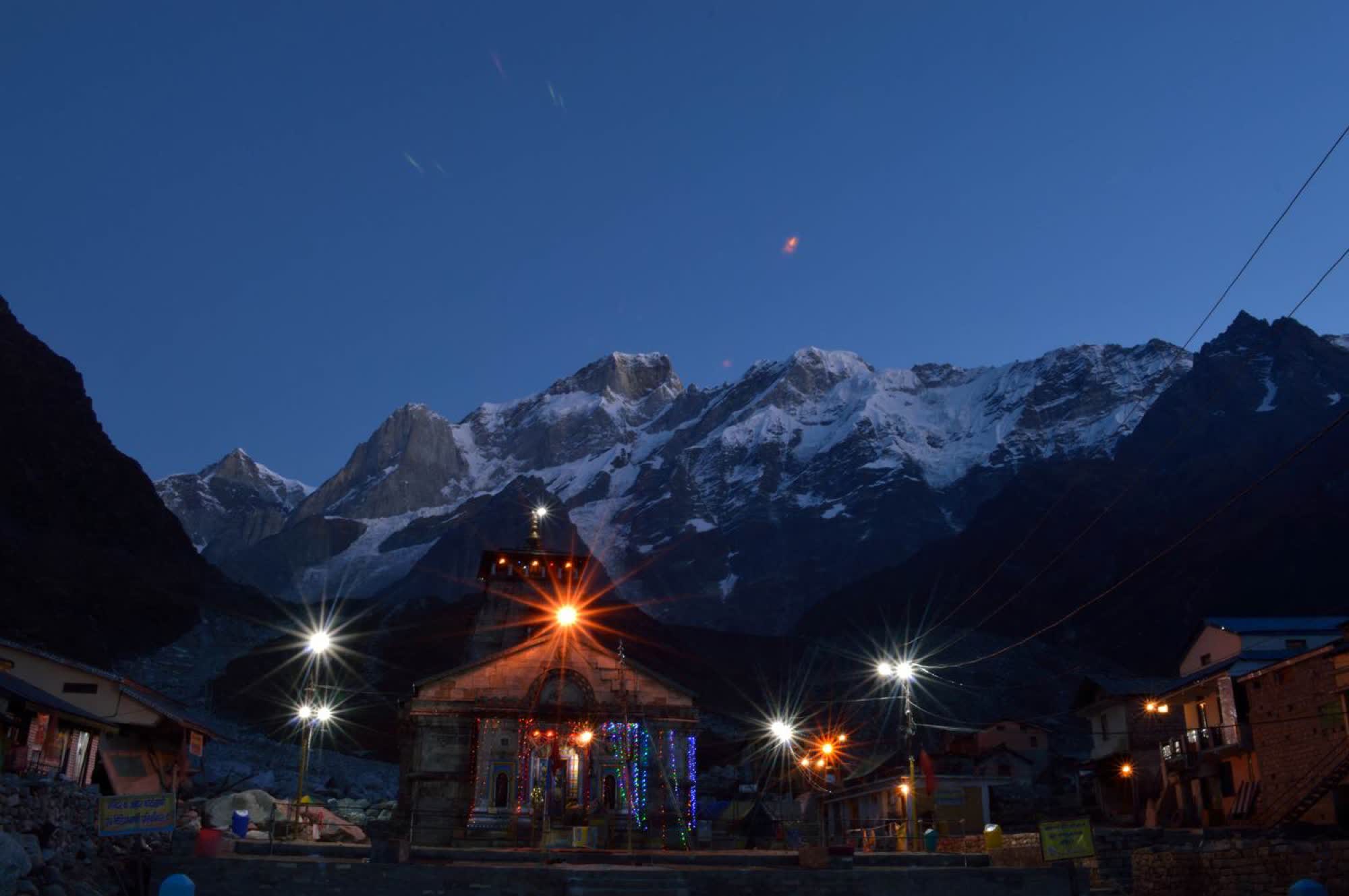
The hump of the bull

When Shiva, in the form of a bull, plunged into the earth to escape Bhima, its hump stayed above the ground at Kedarnath. That is why the lingam here is not the smooth, rounded form found in most Shiva temples. It is a rough, three-sided rock, read as the back of the bull.

Pilgrims still touch and embrace it, and smear it with ghee, as if soothing the bruised back of the god who was caught.

Adi Shankaracharya’s last journey

In the 8th century, the philosopher Adi Shankaracharya walked the length of India reviving its old pilgrim places. Tradition credits him with rebuilding the grey stone temple that stands at Kedarnath today. It also says the Rawal, the chief priest, has come ever since from the Veerashaiva Jangam community of Karnataka.

He is said to have reached Kedarnath at the age of 32 and taken samadhi there. His samadhi shrine stands just behind the temple.

Bhairavnath keeps watch

On a ridge east of the temple stands the shrine of Bhairavnath, the kshetrapal or guardian of Kedarnath. When the doors close for winter and the valley is buried in snow, it is Bhairav who is believed to protect the empty temple.

So the season’s rituals begin and end with him. His worship comes first, and the doors are only sealed after he has been honoured.

The rock that stopped the flood

On the night of 16–17 June 2013, a glacial lake above Kedarnath burst. A wall of water and debris swept through the town and killed thousands of people.

A huge boulder came down with the flood and stopped a few metres behind the temple. The debris split around it, and the temple was left standing almost untouched. Pilgrims now worship the rock as Bhim Shila, Bhima’s stone, the protector who arrived with the flood.

The winter journey to Ukhimath

On Bhai Dooj, the movable idol of Kedarnath is placed in a decorated palanquin, the doli. It is carried down the mountain over several days, to the sound of drums and the army band. It stays the winter at Omkareshwar Temple in Ukhimath, and Kedarnath’s worship continues there until the summer doors open again.

Ukhimath is said to take its name from Usha, the daughter of the asura king Banasura. Tradition says she married Aniruddha, Krishna’s grandson, here, and their marriage altar is still shown inside the temple.

Read all the legends of the five Kedars

पदयात्राTrek simulator

Walk the trail before you walk it

Each trail is traced from OpenStreetMap footpaths, and its height is measured every 20 m from satellite terrain data (SRTM). The hiker walks that real profile on a 3D satellite map. Speed comes from Tobler’s hiking function, adjusted for altitude, your pace and rest stops. At every step you see altitude, gradient, oxygen and temperature, and at the end the time you reach the temple.

Pace
Direction

3D terrain · satellite · camera follows the hiker

——
—
Distance0.0km
Altitude—m
Gradient—%
Oxygen—% of sea level
Temp. vs start—°C
On the trail—h:mm
Clock (IST)——

Data: trail lines © OpenStreetMap contributors (ODbL). Heights come from AWS Terrain Tiles (SRTM, about 30 m resolution), sampled every 20 m. Satellite imagery © Esri, Maxar. Distances are scaled to the official signboard length, because a traced line skips some switchbacks. Model: Tobler’s hiking function, 6·e−3.5|s+0.05| km/h on the trail gradient s. Speed is reduced 9% per 1,000 m above 1,500 m and multiplied by a pace factor, and a 10-minute rest is added each hour. Real times vary with weather, crowds and fitness.

मार्गHow to reach

Getting to Kedarnath

By road

Rishikesh → Devprayag → Rudraprayag → Guptkashi → Sonprayag (≈ 210 km). Private vehicles stop at Sonprayag; shared jeeps run the last 5 km to Gaurikund.

By rail

Yog Nagari Rishikesh (≈ 215 km) or Haridwar (≈ 240 km).

By air

Jolly Grant Airport, Dehradun (≈ 235 km to Sonprayag).

By helicopter

Phata, Sersi or Guptkashi helipads to Kedarnath (≈ 8–10 min). Booking only on heliyatra.irctc.co.in.

आसपासAround the temple

Nearby places

All temples around the five Kedars →

  1. Bhairavnath Temple

    Guardian deity of Kedarnath; worshipped before the doors close for winter.

    ≈ 1 km
  2. Gandhi Sarovar (Chorabari Tal)

    Glacial lake at the snout of the Chorabari glacier.

    ≈ 3 km
  3. Vasuki Tal

    High lake at 4,135 m with Brahma Kamal meadows (Aug–Sep).

    ≈ 8 km
  4. Triyuginarayan

    Where Shiva and Parvati were married; the eternal fire still burns.

    ≈ 12 km from Sonprayag
  5. Gaurikund

    Hot spring and Gauri Mata temple at the start of the walk.

    Trek base
विश्रामWhere to stay

Stays for Kedarnath

GMVN huts, BKTC dharamshalas and tent camps at Kedarnath; full range of hotels at Guptkashi, Sitapur and Sonprayag.

Kedarnath

Guptkashi · Sitapur · Sonprayag

  • GMVN Tourist Rest House
  • Mid-range hotels
  • Budget lodges
  • Helipad-side hotels at Phata / Sersi

Indicative / night₹1,200 – ₹6,000+

Most choice and most comfort on the Kedarnath route. Book early for May–June.

Kedarnath

Kedarnath

  • GMVN cottages & tents
  • BKTC dharamshala
  • Swiss-style tent camps

Indicative / night₹800 – ₹4,000

Limited and sells out. Rooms are basic but warm. Expect it to be cold at night, even in June.

सुझावPilgrim tips

This website is managed by

The Office of MushroomWale.com

A free, independent guide for Panch Kedar pilgrims, prepared and maintained from Uttarakhand. Temple bookings and donations go only through official channels — this site never collects money.

Visit MushroomWale.com
MushroomWale.com — The Mushrooming Expert